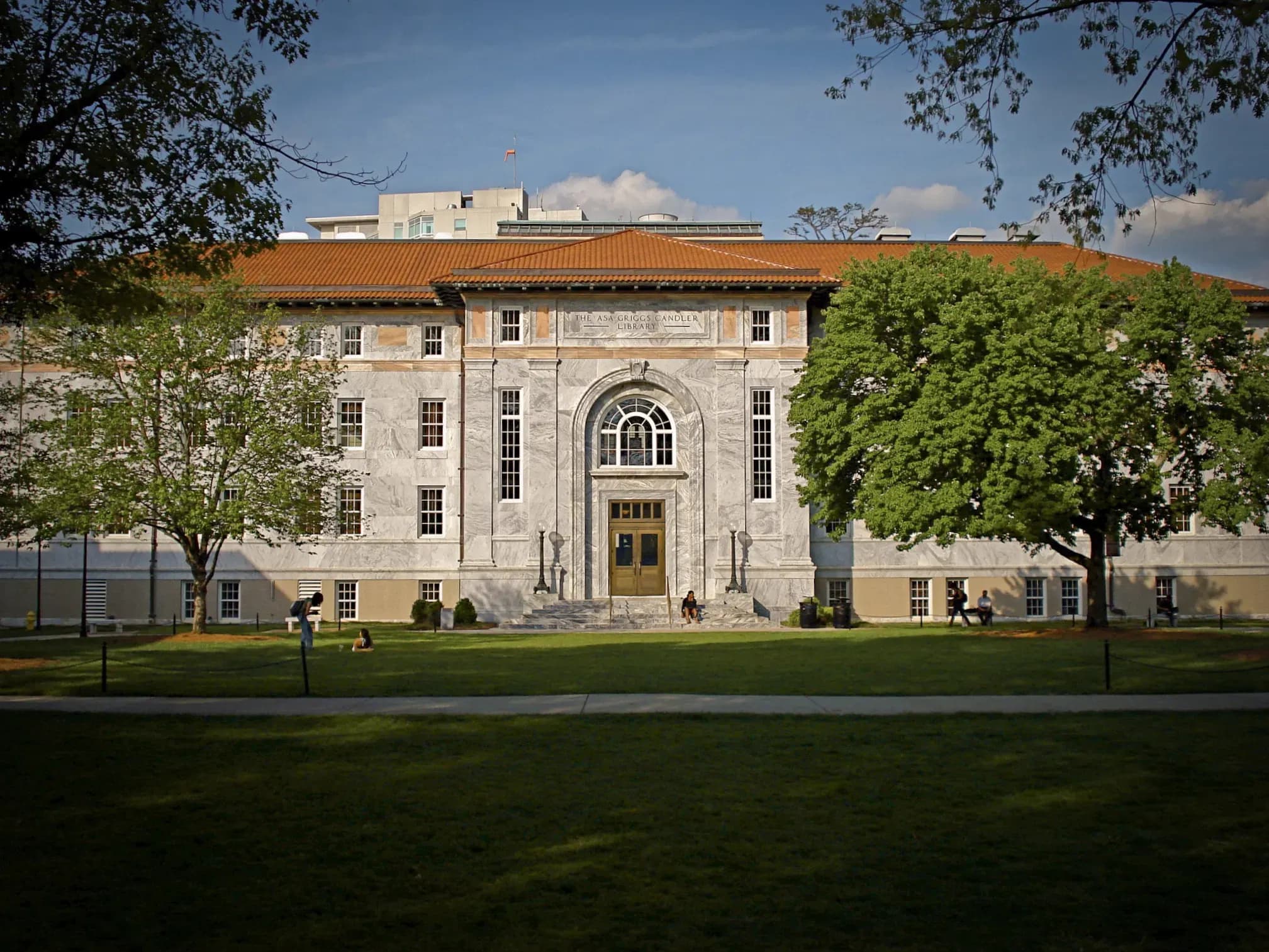

Religion and Classical Civilization
The Religion and Classical Civilization program explores the deep interconnection between ancient societies and their religious traditions, providing students with a robust understanding of classical thought, mythology, and the historical evolution of religious practices. Over the course of four years, students investigate foundational texts, archaeological records, philosophical writings, and theological developments across major ancient civilizations such as Greece, Rome, Egypt, and Mesopotamia. The program encourages an interdisciplinary lens, combining theology, history, philosophy, and classical languages to analyze how religious and cultural narratives shaped ancient worldviews.
This academic journey fosters critical engagement with timeless questions of human existence, morality, and the divine. Students not only interpret sacred texts and historical artifacts but also study how religious beliefs influenced politics, literature, and social institutions. With opportunities for archival research, language studies in Latin and Ancient Greek, and courses in comparative religion, the program builds skills in analytical thinking, cultural literacy, and interpretative reasoning, preparing students to understand both historical and contemporary dimensions of faith and society.
Key Facts
Key Facts
- Program Title: Religion and Classical Civilization
- Degree Type: S. Bachelor
- Duration: 4 years
- Mode of Study: Full-time, On Campus
- Application Deadline: 01 January 2026
- Location: Emory University, United States
- Field of Study: Theology and Religious Studies
- Language of Instruction: English
Program Structure
Year 1 – Foundations in Religion and Antiquity
• Introduction to the Study of Religion
• Classical Mythology
• Elementary Latin or Ancient Greek I & II
• History of Ancient Civilizations
Year 2 – Sacred Texts and Cultural Contexts
• Hebrew Bible or New Testament Studies
• Greek and Roman Religion
• Intermediate Latin or Greek
• Philosophy in the Ancient World
Year 3 – Comparative Analysis and Interpretation
• Religion and Politics in Antiquity
• Early Christianity or Pagan Cultures
• Archaeology of the Ancient Mediterranean
• Elective: Gender in Ancient Religion
Year 4 – Special Topics and Capstone
• Ritual and Symbolism in Ancient Religion
• Senior Thesis Seminar
• Independent Research in Classical Religion
• Religion and Literature of Late Antiquity
Career Opportunities
Graduates of this program are equipped with a strong foundation in analytical thinking, historical interpretation, and cultural analysis, which opens doors to a wide range of professional paths. Many pursue advanced degrees in theology, classics, archaeology, or ancient history, while others find roles in education, museum curation, publishing, non-profit cultural organizations, or religious institutions. The program’s interdisciplinary training also supports careers in diplomacy, historical consultancy, or policy advising, where a deep understanding of cultural roots and human belief systems proves invaluable. Employers increasingly value the ability to contextualize modern issues through historical perspectives, a skill graduates develop extensively in this field.
Why Choose This Program
The Religion and Classical Civilization program is ideal for students passionate about exploring the ancient world’s intellectual and spiritual heritage. At Emory University, students benefit from a curriculum that balances rigorous textual study with hands-on historical inquiry, supported by faculty with expertise in both classical antiquity and comparative religion. The program fosters a vibrant academic environment where students engage with profound questions about the human condition, the divine, and the evolution of belief. By integrating critical analysis, cross-cultural understanding, and historical depth, this program empowers students to make meaningful contributions in academic, professional, and civic life.
Contact Information
For further information, please contact the admissions office at:
Phone: +1 404 727 6123
Email: contentedit@emory.edu
Address: University of Emory, 201 Dowman Drive, Atlanta, GA 30322, United States
