The Bachelor of Arts in Religious Studies offers a comprehensive exploration of world religions, theological traditions, and the social, cultural, and historical contexts in which religious beliefs develop. Students examine sacred texts, rituals, and philosophical ideas while developing critical thinking and analytical skills to understand the role of religion in society. The program integrates historical, cultural, and ethical perspectives, encouraging learners to engage with diverse religious traditions thoughtfully and academically. Through interdisciplinary study, students gain a nuanced understanding of how faith, culture, and society interact across different communities and eras.
Throughout the four-year curriculum, students engage in courses covering religious history, comparative theology, ethics, and contemporary religious issues. They also explore intersections between religion and politics, science, and society, fostering cultural literacy and scholarly insight. Research projects, independent study, and experiential learning opportunities allow students to apply their knowledge to real-world contexts, preparing them for careers that require strong analytical, interpretive, and communication skills. The program’s blend of theoretical understanding and applied exploration equips graduates for advanced study, public service, education, and roles in diverse professional fields.
Key Facts
Key Facts
- Program Title: Religious Studies
- Degree Type: Bachelor of Arts
- Duration: 4 years
- Mode of Study: Full-time, On Campus
- Application Deadline: 05 January 2026
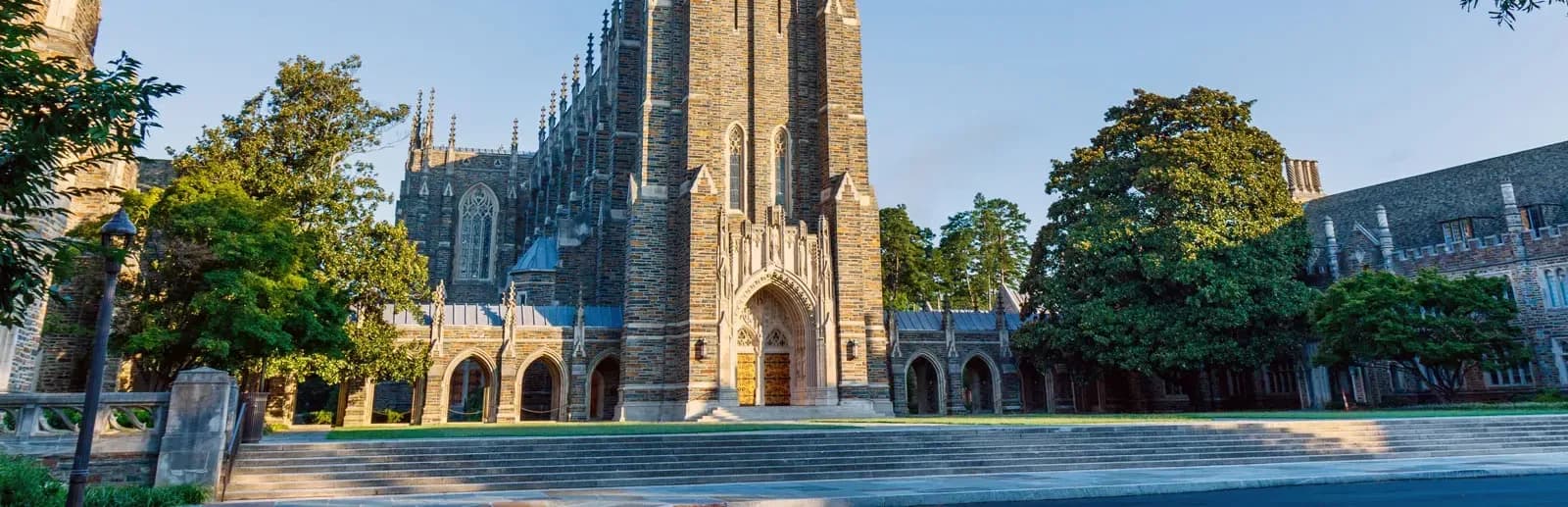
- Location: Duke University, United States
- Field of Study: Theology and Religious Studies
- Language of Instruction: English
Program Structure
Year 1 – Foundations of Religious Thought
• Introduction to Religious Studies
• World Religions Survey
• Academic Writing and Research Skills
• Ethical and Philosophical Inquiry
Year 2 – Core Theological and Historical Studies
• History of Religions I: Ancient to Medieval
• Comparative Theology
• Religion and Society
• Methods in Religious Studies
Year 3 – Advanced Topics & Critical Analysis
• History of Religions II: Modern Period
• Religion, Politics, and Culture
• Contemporary Religious Movements
• Electives in Philosophy, Sociology, or Ethics
Year 4 – Capstone & Independent Research
• Senior Research Seminar
• Independent Thesis or Project
• Advanced Studies in Religious Texts and Traditions
• Specialized Electives in Theology, Ethics, or Interfaith Studies
Career Opportunities
Graduates of this program are prepared for diverse professional roles that require strong analytical, interpretive, and communication skills. Many pursue careers in education, nonprofit organizations, cultural institutions, interfaith initiatives, and public service, applying their understanding of religious traditions and cultural contexts to promote dialogue, social engagement, and policy development. Graduates are also well positioned for advanced study in theology, religious studies, law, international relations, or ethics, enabling them to pursue scholarly or professional pathways with a foundation in cultural literacy and ethical reasoning. The program equips learners with the ability to navigate complex societal questions, making them valuable contributors in both academic and applied professional settings.
Why Choose This Program
This program is ideal for students seeking to explore religion through a rigorous academic lens while developing critical analytical skills and cross-cultural understanding. Its curriculum combines historical, cultural, and ethical perspectives, allowing students to study sacred texts, theological debates, and contemporary issues in depth. Through coursework, research, and experiential learning, students cultivate interpretive skills, intellectual independence, and a capacity for thoughtful engagement with diverse perspectives. The program fosters scholarly curiosity and prepares graduates for meaningful careers or advanced study, equipping learners with the tools to approach complex religious and cultural questions with insight, sensitivity, and analytical rigor.
Contact Information
For further information, please contact the admissions office at:
Phone: +1 (919) 684-8111
Email: admissions@duke.edu
Address: University of Duke, Durham, North Carolina, United States
