.png&w=640&q=75)
Religious Studies
The Bachelor of Arts in Religious Studies at Texas University provides a comprehensive program designed to explore religion, spirituality, ethics, and cultural practices across the world. Over the four year curriculum, students examine the beliefs, texts, rituals, and social impacts of diverse religious traditions, developing critical thinking, analytical reasoning, and interpretive skills. The program emphasizes cultural literacy, ethical analysis, historical understanding, and research competence, enabling students to investigate how religion shapes societies, identities, and global interactions. Students engage in lectures, seminars, and project based assignments, cultivating the ability to evaluate religious texts, understand philosophical perspectives, and analyze contemporary social and moral issues.
As students advance, they study specialized topics such as theology, comparative religion, philosophy of religion, ethics, and religion in public life, complemented by independent research projects and field studies. The curriculum fosters analytical thinking, cultural sensitivity, and research expertise, allowing students to examine the role of religion in historical and contemporary contexts. By the final year, learners are prepared to conduct original research, present nuanced arguments, and apply their knowledge to academic, professional, or community settings, equipping them for careers or further studies in theology, education, public service, or international and cultural studies.
Key Facts
Key Facts
- Program Title: Religious Studies
- Degree Type: Bachelor of Arts
- Duration: 4 years
- Mode of Study: Full-time, On Campus
- Application Deadline: 01 December 2025
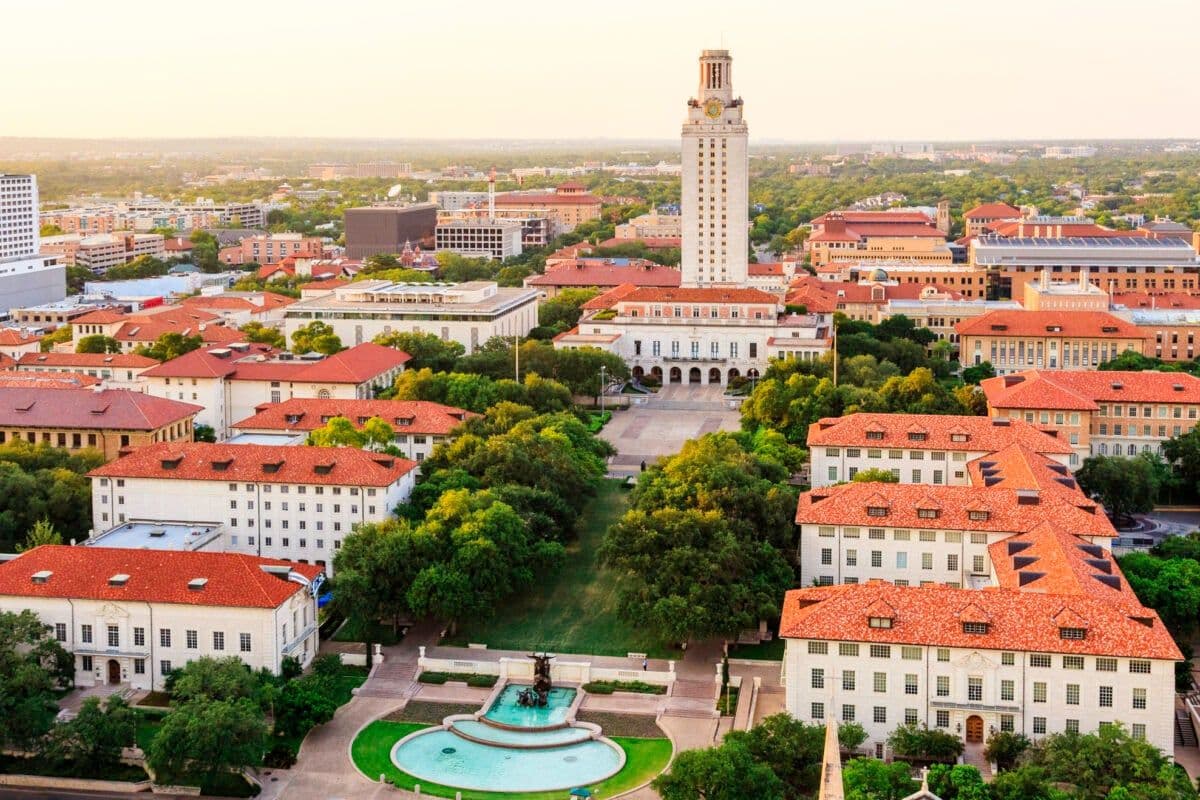
- Location: University of Texas at Austin, United States
- Field of Study: Theology and Religious Studies
- Language of Instruction: English
Program Structure
Year 1 Foundations of Religious Studies
• Introduction to World Religions
• Ethics and Philosophy
• Religious Texts and Interpretation
• Critical Thinking and Writing
Year 2 Core Studies in Religion
• Comparative Religion
• History of Religious Movements
• Religion in Society and Politics
• Research Methods in Theology
Year 3 Advanced Religious Analysis
• Theology and Philosophy of Religion
• Religion and Culture
• Electives in Sacred Texts, Rituals, or Ethics
• Seminar in Religious Studies
Year 4 Capstone Project and Specialization
• Independent Research Project
• Senior Seminar in Religion and Society
• Applied Ethics and Intercultural Studies
• Professional Skills and Academic Portfolio
Career Opportunities
Graduates of this program are prepared for careers that require strong analytical, research, and intercultural communication skills. Opportunities include education and academia, nonprofit and community work, interfaith and cultural program coordination, public policy and social services, and roles in religious organizations, museums, and international agencies. Graduates may also pursue careers in journalism, cultural consulting, humanitarian work, or graduate studies in theology, religious studies, philosophy, or social sciences. The program equips students with the ability to interpret complex religious ideas, engage with diverse cultural perspectives, and apply ethical reasoning in professional contexts.
Why Choose This Program
This program is ideal for students seeking to develop critical thinking, cultural literacy, ethical reasoning, and research skills through a curriculum that combines theoretical study with applied learning. Its four year structure allows learners to progress from foundational knowledge to advanced analysis, independent research, and professional application. Students benefit from seminars, field studies, collaborative projects, and faculty mentorship, cultivating intellectual depth, analytical rigor, and intercultural understanding. Graduates leave the program with the ability to research, analyze, and communicate effectively about religion and society, preparing them for meaningful careers, leadership roles, or advanced academic study in theology, religious studies, and related fields.
Contact Information
For further information, please contact the admissions office at:
Phone: +1 (512) 471-3434
Email: gradadmissions@utexas.edu
Address: 110 Inner Campus Drive, Stop G1800, Austin, TX 78712, USA
