Sacred Music
The Sacred Music program is a two-year full-time pathway designed for musicians and scholars seeking advanced expertise in liturgical music, composition, and performance within religious contexts. Across four semesters, participants explore the history, theory, and practice of sacred music, including choral conducting, organ performance, and vocal techniques, while engaging deeply with diverse religious and cultural traditions. The curriculum combines rigorous musical training with scholarly study, allowing students to analyze and interpret musical works, develop performance skills, and create compositions suitable for worship and community settings. Through applied practice, ensemble work, and research projects, students develop musical proficiency, conducting skills, theoretical understanding, and creative expression, preparing them for professional leadership in sacred music contexts.
The program also emphasizes interdisciplinary collaboration, historical scholarship, and performance excellence. Students work closely with experienced faculty, participating in workshops, liturgical rehearsals, and applied research assignments that integrate musical artistry with scholarly inquiry. This immersive environment strengthens technical mastery, interpretive skill, ensemble leadership, and pedagogical competence. Graduates leave the program equipped to lead music ministries, teach at academic or religious institutions, perform professionally, or pursue advanced research in musicology or sacred music studies.
Key Facts
Key Facts
- Program Title: Sacred Music
- Degree Type: Master of Music
- Duration: 2 years
- Mode of Study: Full-time, On Campus
- Application Deadline: 15 December 2025
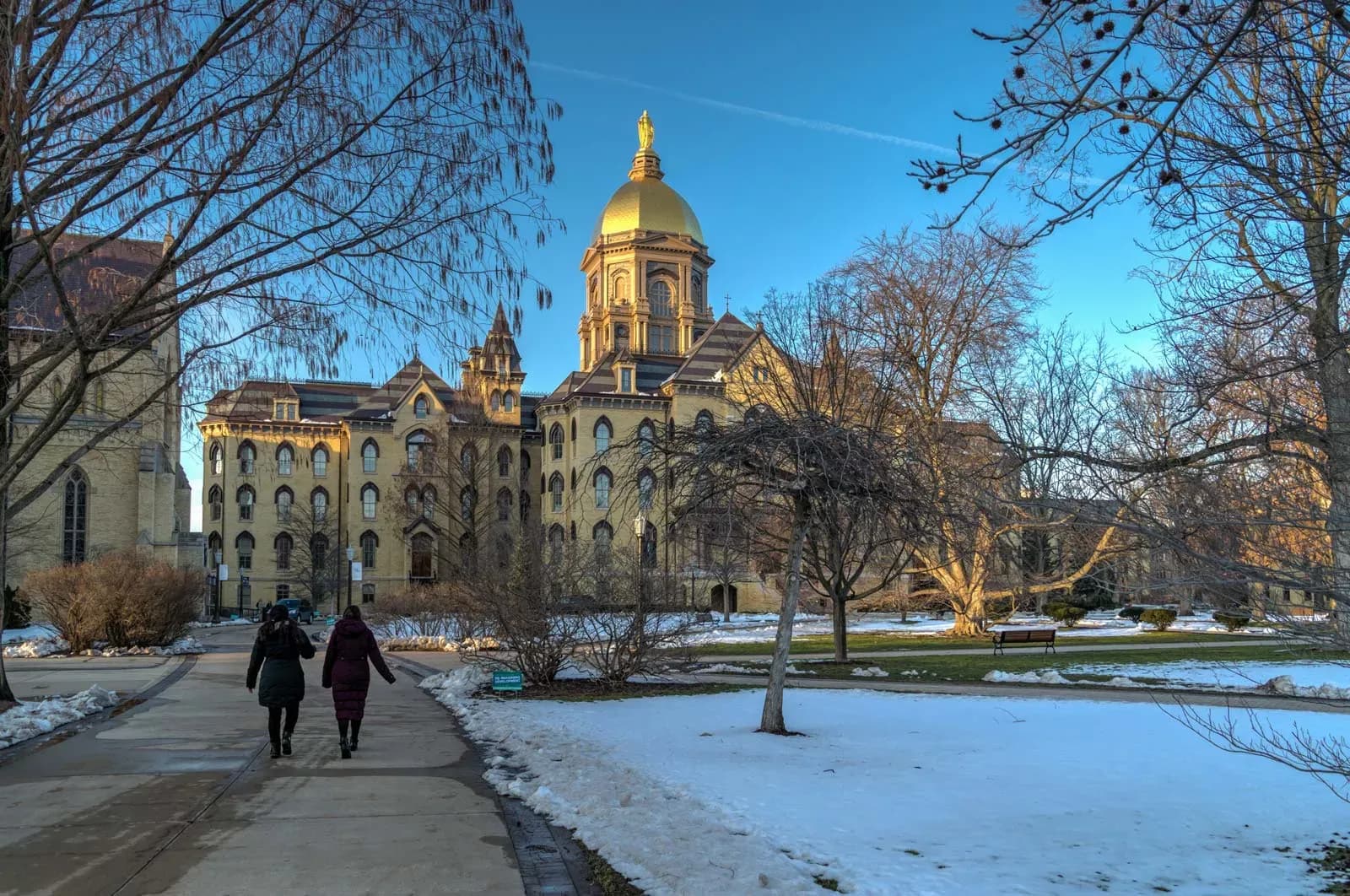
- Location: University of Notre Dame, United States
- Field of Study: Music
- Language of Instruction: English
Program Structure
Semester 1 - Foundations in Sacred Music
• Introduction to Sacred Music History
• Choral Conducting Techniques
• Organ Performance and Keyboard Skills
• Music Theory and Analysis
Semester 2 - Liturgical Music and Performance
• Vocal Techniques for Sacred Music
• Liturgical Repertoire and Practices
• Composition and Arranging for Worship
• Seminar: Music and Theology
Semester 3 - Advanced Studies and Applied Research
• Advanced Conducting and Ensemble Leadership
• Music Pedagogy in Religious Settings
• Independent Composition or Performance Project
• Elective Modules in Musicology or Performance Studies
Semester 4 - Capstone Performance and Thesis
• Master’s Thesis in Sacred Music
• Recital and Public Performance
• Research Project in Liturgical Music
• Portfolio Development and Professional Presentation
Career Opportunities
Graduates of this program are prepared for careers where advanced musical expertise, liturgical knowledge, and leadership in performance are essential. Potential career paths include church or cathedral music director, choral conductor, organist, music educator in academic or religious institutions, and composer or arranger for liturgical settings, where graduates apply technical, interpretive, and leadership skills. The program equips students to design and lead musical programs, teach sacred music, perform at professional levels, and contribute to the preservation and innovation of liturgical music traditions. Graduates are also positioned to pursue doctoral studies, research, or international performance opportunities.
Why Choose This Program
This program offers a comprehensive and immersive approach to sacred music performance, choral conducting, liturgical composition, music theory, and pedagogical skills. Participants benefit from expert faculty mentorship, hands-on ensemble practice, and opportunities for applied research and public performance. The curriculum emphasizes both musical artistry and scholarly inquiry, fostering the development of technical mastery, creative expression, and professional leadership. By integrating historical study, performance practice, and applied research, the program prepares graduates to excel in professional music careers, contribute to religious and academic communities, and lead innovative musical initiatives within liturgical and cultural contexts.
Contact Information
For further information, please contact the admissions office at:
Phone: +1 574 631 5000
Email: admissions@nd.edu
Address: University of Notre Dame, Notre Dame, IN 46556, United States
