Master of Science · Full-time · Online
University of Pennsylvania
Philadelphia, United States
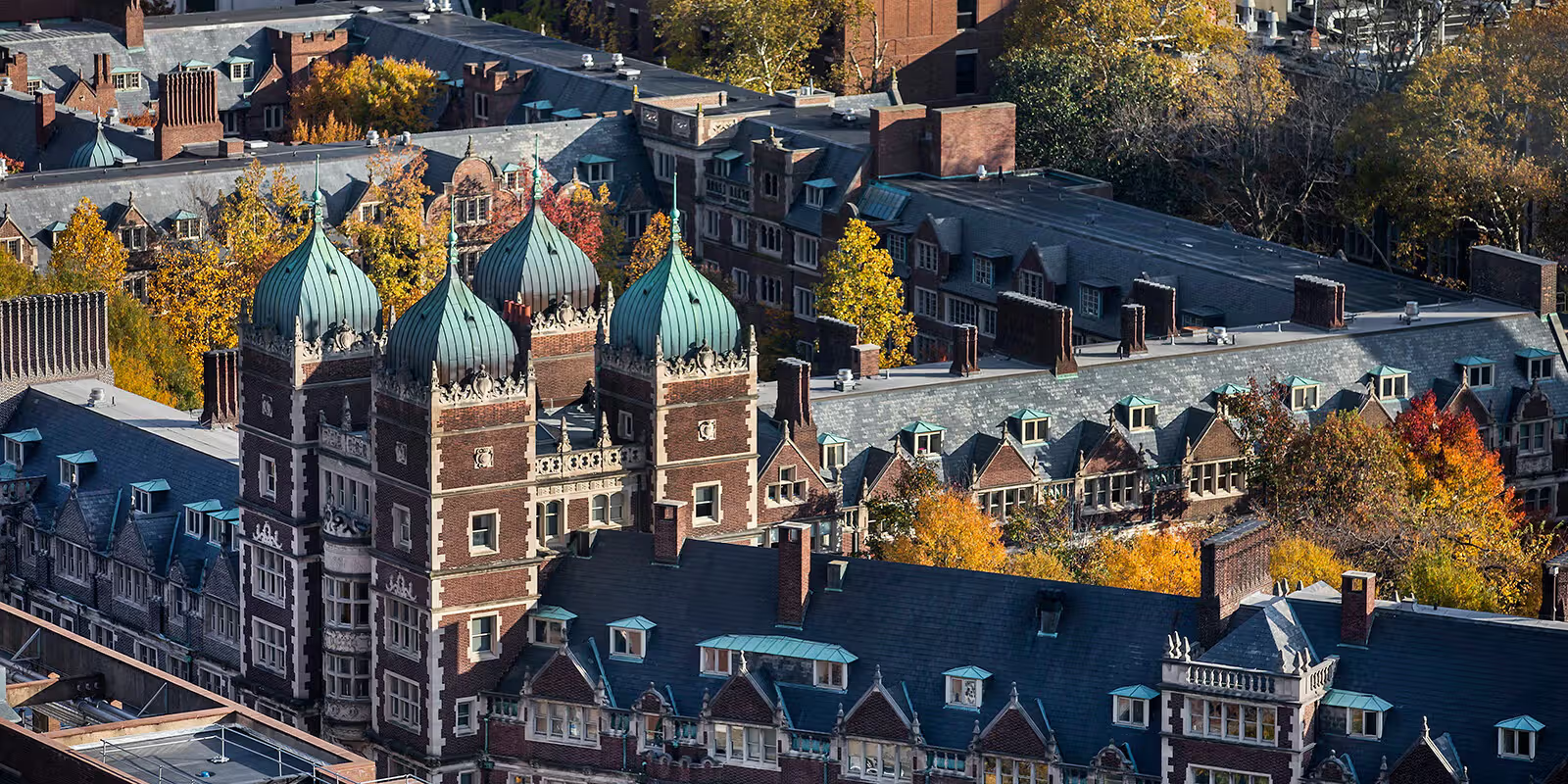
The School and Mental Health Counseling program at Pennsylvania University is a comprehensive, two-year graduate degree designed to prepare professionals for dual competency in both school-based and clinical mental health settings. This full-time, on-campus program combines advanced coursework in developmental psychology, counseling techniques, and ethical practice with extensive supervised fieldwork. Students gain the knowledge and tools to support the emotional, social, and academic development of children and adolescents while also addressing broader mental health issues across diverse communities. The program follows a holistic and culturally responsive approach, integrating theory with real-world practice to develop counselors who can make an immediate difference in educational environments and beyond.
With a curriculum informed by national standards and clinical best practices, students are guided through the evolving landscape of mental health care and educational support services. Faculty members are experienced practitioners and researchers who provide mentorship, academic rigor, and professional insight throughout the program. The structure of the coursework includes individual and group counseling methods, trauma-informed care, school law, assessment strategies, and crisis intervention techniques. Practicum and internship experiences are arranged in collaboration with schools and clinical organizations, offering students a robust platform to build their professional identity, enhance counseling skills, and prepare for licensure and certification as school counselors and mental health practitioners.
Semester 1 – Foundations of Counseling and Education
Semester 2 – Clinical Techniques and Application
Semester 3 – Advanced Practice and Mental Health Integration
Semester 4 – Professional Readiness and Capstone
Graduates of this program are uniquely positioned to pursue careers in both school counseling and mental health services, making them versatile professionals in a high-demand field. They are qualified to work in K–12 public and private schools, providing academic guidance, social-emotional support, and career counseling to students. Additionally, they are prepared for roles in community mental health centers, hospitals, private practices, and nonprofit organizations, where they can address issues such as anxiety, trauma, family conflict, and behavioral disorders. Many go on to become licensed professional counselors (LPC) or certified school counselors, while others take leadership positions in student services, educational policy, or therapeutic program design. This dual focus opens doors to a range of career options where compassionate expertise and clinical training are both essential.
This program is ideal for individuals passionate about helping children and adolescents navigate complex emotional and academic challenges. What makes it especially powerful is its commitment to training counselors who are equally skilled in educational settings and clinical environments, bridging a critical gap in mental health support systems. Students receive both the theoretical foundation and practical experience necessary to be effective advocates and therapeutic professionals. With strong faculty mentorship, rich field placement opportunities, and a mission rooted in service and equity, this program shapes graduates into empathetic, well-prepared, and highly employable counselors. Choosing this program means choosing a path that is both professionally rewarding and personally meaningful—where your work has the power to shape futures and heal lives.
For further information, please contact the admissions office at:
Phone: +1 215 898 5000
Email: admissions@upenn.edu
Address: University of Pennsylvania, Philadelphia, PA 19104, United States
Master of Science · Full-time · Online
University of Pennsylvania
Philadelphia, United States
Bachelor of Arts · Full-time · On Campus
University of Pennsylvania
Philadelphia, United States
Bachelor of Science · Full-time · On Campus
University of Pennsylvania
Philadelphia, United States
S. Master · Full-time · On Campus
University of Pennsylvania
Philadelphia, United States
