Bachelor of Arts · Full-time · On Campus

Northwestern University
Evanston, United States
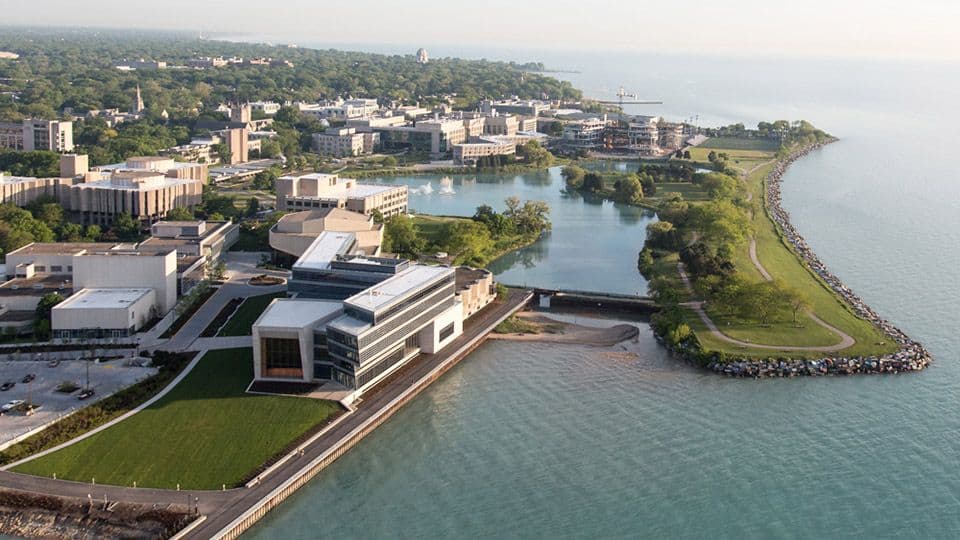
The Science in Human Culture program at Northwestern University offers an interdisciplinary investigation into how science and technology are shaped by—and in turn shape—society, culture, and history. This four-year Bachelor of Science degree is designed for students who are interested in examining science beyond its technical foundations, focusing instead on its ethical, political, and social dimensions. Drawing from fields such as sociology, history, philosophy, anthropology, and science and technology studies (STS), the curriculum helps students explore how scientific knowledge is produced, communicated, and received across different communities and eras. Through this lens, students develop critical insight into the cultural construction of science, enabling them to assess both its achievements and limitations in addressing human needs and global challenges.
The program emphasizes historical context, cultural analysis, and intellectual flexibility, allowing students to understand scientific knowledge not as fixed or isolated but as part of a dynamic human enterprise. Courses encourage students to ask questions such as: How do social values influence scientific agendas? What role do institutions play in legitimizing expertise? And how does science shape our understanding of race, gender, nature, and health? Faculty from multiple disciplines guide students through case studies, archival research, policy debates, and cross-cultural comparisons. By graduation, students are equipped with analytical skills, interdisciplinary literacy, and ethical awareness, making them adept at navigating the increasingly complex relationship between science and society.
Year 1 – Foundations in Society and Science
• Introduction to Science in Human Culture
• Sociology of Knowledge or Anthropology of Science
• Academic Writing and Research Methods
• Science, Technology, and Modern Life
Year 2 – Cultural Perspectives and Historical Contexts
• History of Medicine or Environmental History
• Philosophy of Science
• Ethics in Scientific Practice
• Case Studies in Science and Society
Year 3 – Institutions, Identities, and Communication
• Gender, Race, and Science
• Politics and Policy of Technoscience
• Science Communication and Public Understanding
• Independent Research Methods Seminar
Year 4 – Capstone, Specialization, and Public Engagement
• Senior Thesis or Research Project
• Global Perspectives on Science and Innovation
• Seminar in Science, Culture, and Power
• Interdisciplinary Elective (e.g. Bioethics, Digital Media, or Health Policy)
Graduates of the Science in Human Culture program are well-prepared for intellectually and socially impactful careers that require both cultural understanding and analytical depth. Many go on to work in public policy, healthcare ethics, science communication, nonprofit advocacy, or museum and archival institutions, where they help bridge the gap between scientific institutions and the public. Others pursue advanced degrees in sociology, science and technology studies, law, public health, or environmental policy, where their interdisciplinary training gives them a significant advantage. Their ability to critique scientific knowledge, understand its social implications, and communicate complex ideas with clarity prepares them for roles in government, education, research coordination, or think tanks. With their unique combination of historical awareness, ethical reasoning, and cross-cultural analysis, graduates contribute to more informed, inclusive, and socially responsible approaches to science and innovation.
This program is ideal for students who want to explore science not just as a technical practice, but as a profoundly human and cultural endeavor. At Northwestern, students are supported by faculty from multiple departments who bring diverse perspectives to the study of science, making the academic environment both intellectually challenging and deeply collaborative. The curriculum encourages critical inquiry, ethical reflection, and interdisciplinary exploration, helping students become thoughtful analysts of scientific discourse and its societal impact. With access to research centers, internship placements, and cross-campus partnerships, students gain hands-on experience in both academic and applied settings. The program cultivates cultural sensitivity, intellectual agility, and a commitment to public engagement, making it an exceptional choice for students who seek to understand and influence the evolving role of science in our global world.
For further information, please contact the admissions office at:
Phone: +1 312 555 2040
Email: admissions@northwestern.edu
Address: University of Northwestern, 633 Clark Street, Evanston, IL 60208, United States
Bachelor of Arts · Full-time · On Campus
Northwestern University
Evanston, United States
Bachelor of Science · Full-time · On Campus
Northwestern University
Evanston, United States
Bachelor of Science · Full-time · On Campus
Northwestern University
Evanston, United States
Bachelor of Science · Full-time · On Campus
Northwestern University
Evanston, United States
