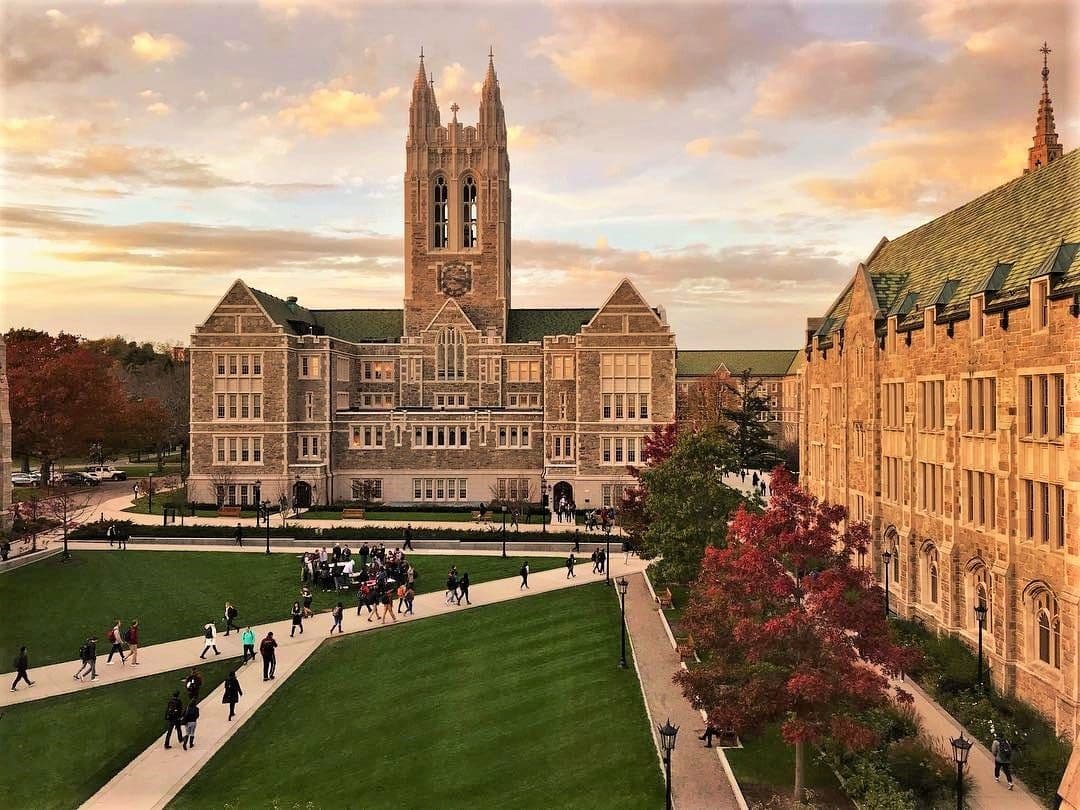

The Master of Science in Earth Sciences at Boston College University offers a research-driven, interdisciplinary education for students aiming to understand the physical processes shaping our planet. The program integrates geology, environmental science, and geophysics to examine Earth's structure, surface dynamics, climate systems, and natural resources. Students engage with both theoretical models and practical field methods to study Earth's history and ongoing environmental transformations. Through laboratory work, field studies, and data analysis, learners build scientific proficiency in understanding natural phenomena and interpreting complex geologic systems.
The program emphasizes the development of research skills and critical analysis through active engagement with topics such as tectonics, hydrology, sedimentology, and climate change. Students work closely with faculty on independent projects and applied research, often using advanced technologies such as GIS, remote sensing, and geochemical instrumentation. This well-rounded approach helps students cultivate technical expertise, environmental awareness, and the ability to address contemporary scientific challenges through rigorous investigation and collaboration.
Key Facts
Key Facts
- Program Title: Science
- Degree Type: Master of Science
- Duration: 2 years
- Mode of Study: Full-time, On Campus
- Application Deadline: 01 February 2026
- Location: Boston College, United States
- Field of Study: Earth Sciences
- Language of Instruction: English
Program Structure
Semester 1 – Core Concepts in Earth Sciences
- Fundamentals of Geology and Earth Systems
- Geochemistry and Earth Materials
- Scientific Research Methods
- Field Techniques in Earth Sciences
Semester 2 – Processes and Environments
- Structural Geology and Plate Tectonics
- Sedimentology and Surface Processes
- Geographic Information Systems (GIS)
- Seminar: Current Topics in Earth Science
Semester 3 – Applied Research and Analysis
- Climate and Environmental Change
- Hydrogeology and Water Resources
- Elective: Volcanology or Seismology
- Research Proposal Development and Fieldwork
Semester 4 – Thesis and Professional Preparation
- Master’s Thesis in Earth Sciences
- Advanced Data Interpretation and Modeling
- Academic Portfolio and Presentation
- Career Skills for Scientific Professionals
Career Opportunities
Graduates of this program are prepared to enter a wide range of scientific, environmental, and technical fields that address Earth's dynamic systems and resource management. Career paths include roles as geoscientists, environmental consultants, hydrologists, or research specialists, working in industries such as energy, mining, environmental protection, and civil engineering. Many also find opportunities in government agencies, geological surveys, nonprofit environmental organizations, or research laboratories where earth science expertise is vital for sustainable planning, hazard assessment, and resource analysis. The program’s combination of technical training, analytical rigor, and applied research experience equips graduates to manage large data sets, interpret geophysical patterns, and contribute to policies and projects related to land use, climate resilience, and natural systems analysis. For those pursuing academic or scientific careers, the thesis component provides strong preparation for doctoral study or research-intensive roles.
Why Choose This Program
This program is ideal for students who want to explore Earth's complexities through a hands-on, inquiry-based curriculum supported by field research, laboratory investigation, and interdisciplinary analysis. With close mentorship from experienced faculty and access to advanced scientific tools, students develop the ability to interpret geological data and evaluate the environmental processes shaping today’s world. The program fosters collaboration, critical thinking, and scientific communication, allowing students to grow as independent researchers and informed professionals. Through its balance of foundational theory, real-world application, and research excellence, the program offers a dynamic educational experience grounded in comprehensive earth science training, preparing graduates for impactful careers in environmental stewardship, research, and geoscience innovation.
Contact Information
For further information, please contact the admissions office at:
Phone: +1 617 552 8000
Email: admissions@bostoncollege.edu
Address: University of Boston College, Chestnut Hill, MA 02467, United States
