Social Policy
The Social Policy program at Northwestern University provides a comprehensive understanding of how government actions, institutional frameworks, and societal forces intersect to shape policies affecting education, health, housing, and employment. Through a combination of political science, economics, and sociology, students examine the design, implementation, and impact of public policy on different communities. The curriculum develops the ability to critically assess social programs and the structural challenges they address, with an emphasis on equity and inclusion.
Students are encouraged to connect theory with practice through case studies, policy simulations, and internships in government, nonprofit, and research institutions. This experiential learning component allows students to analyze real-world policy problems and propose data-informed solutions. Courses focus on topics such as inequality, healthcare reform, labor markets, and urban development, providing a solid foundation for understanding and influencing today's complex policy landscape.
Key Facts
Key Facts
- Program Title: Social Policy
- Degree Type: Bachelor of Arts
- Duration: 4 years
- Mode of Study: Full-time, On Campus
- Application Deadline: 02 January 2026
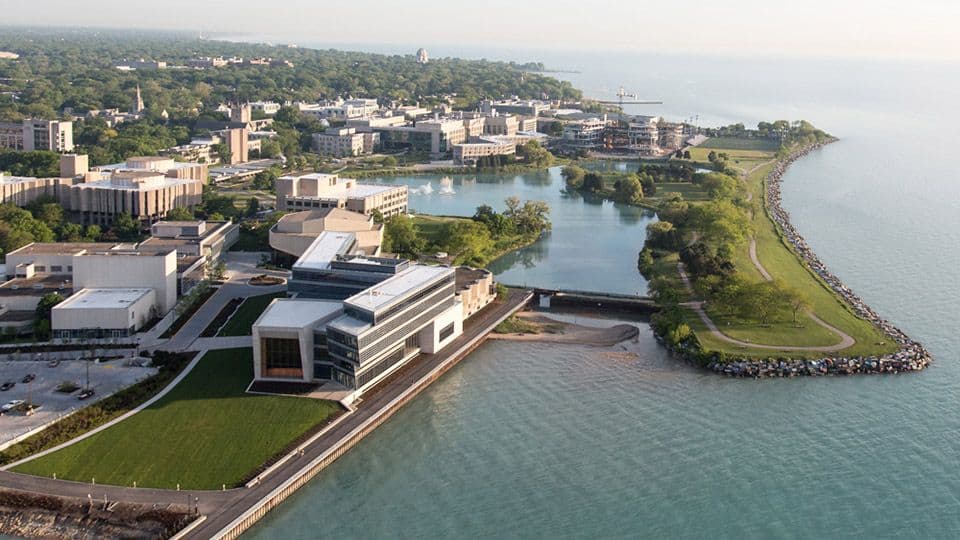
- Location: Northwestern University, United States
- Field of Study: Social Policy
- Language of Instruction: English
Program Structure
Year 1 – Foundations of Social Analysis
• Introduction to Public Policy
• Principles of Microeconomics
• American Government and Politics
• Quantitative Reasoning and Data Literacy
Year 2 – Institutions and Society
• Sociology of Social Problems
• Law and Social Policy
• Statistical Methods for Policy Analysis
• Policy Writing and Communication
Year 3 – Applied Policy Analysis
• Education and Welfare Policy
• Health Policy and Social Equity
• Urban Policy and Community Change
• Research Methods in Social Sciences
Year 4 – Capstone and Specialization
• Senior Seminar in Social Policy
• Ethics and Public Decision-Making
• Independent Policy Research Project
• Electives in Comparative or Global Policy
Career Opportunities
Graduates of the Social Policy program are well-prepared to pursue careers in public administration, nonprofit leadership, policy research, and community advocacy. Many work for government agencies, think tanks, NGOs, or education-focused organizations, where they help evaluate existing programs and craft new initiatives that promote social equity and justice. Others take roles in strategic consulting or corporate social responsibility, using their skills in data analysis and ethical reasoning to inform institutional decisions. The program also lays a strong foundation for graduate study in public policy, law, urban planning, or social work, offering diverse paths to influence meaningful societal change.
Why Choose This Program
Northwestern's Social Policy program stands out for its interdisciplinary rigor and commitment to real-world impact. It allows students to understand policy not only as a government function but as a societal process shaped by economics, culture, and institutions. With access to Chicago’s diverse policy landscape and partnerships with major policy organizations, students gain hands-on experience that enhances classroom learning. The program encourages deep analytical thinking, ethical responsibility, and effective communication—critical skills for those seeking to drive reforms that make a tangible difference in people’s lives.
Contact Information
For further information, please contact the admissions office at:
Phone: +1 312 555 2040
Email: admissions@northwestern.edu
Address: University of Northwestern, 633 Clark Street, Evanston, IL 60208, United States
