
The Bachelor of Arts in Sociology offers an in-depth exploration of how societies function, how social structures shape individual experiences, and how cultural, economic, and political forces influence human behavior. Students examine core sociological concepts such as inequality, identity formation, social change, deviance, and collective behavior while developing strong analytical and interpretive skills. The curriculum introduces learners to theories of society, empirical research practices, and comparative social analysis, helping them understand how social patterns emerge and persist across various communities. This interdisciplinary foundation strengthens critical awareness, research clarity, contextual interpretation, and analytical depth, enabling students to evaluate social issues with precision.
Over the four-year program, students engage with advanced topics including globalization, race and ethnicity, gender studies, urban systems, family structure, and social policy. They explore how institutions—such as education, healthcare, media, and government—shape opportunities and influence social inequality. Coursework incorporates qualitative and quantitative research methods, data analysis, ethnographic study, and sociological theory, allowing students to bridge abstract concepts with real-world phenomena. Through seminars, fieldwork, independent research, and writing-intensive assignments, learners refine their ability to interpret social data, critique institutional practices, and understand social transformations. This sustained academic engagement cultivates methodological rigor, comparative evaluation, research competence, and scholarly independence, preparing graduates to contribute thoughtfully to discussions about society and social change.
Key Facts
Key Facts
- Program Title: Sociology
- Degree Type: Bachelor of Arts
- Duration: 4 years
- Mode of Study: Full-time, On Campus
- Application Deadline: 02 January 2026
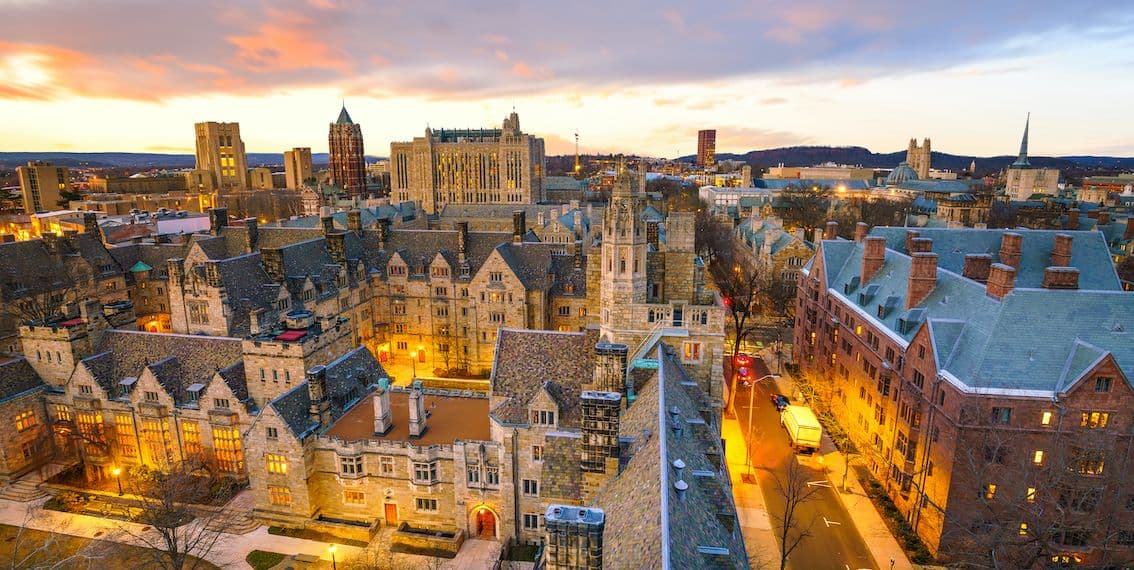
- Location: Yale University, United States
- Field of Study: Sociology
- Language of Instruction: English
Program Structure
Year 1 – Foundations of Sociological Study
· Introduction to Sociology
· Social Theory: Classical Foundations
· Social Problems and Contemporary Challenges
· Methods in Social Science Research
Year 2 – Core Themes in Society & Inequality
· Race, Ethnicity, and Social Identity
· Sociology of Gender and Family
· Urban Sociology and Community Dynamics
· Quantitative and Qualitative Research Methods
Year 3 – Advanced Sociological Inquiry
· Globalization and Transnational Sociology
· Culture, Media, and Social Influence
· Social Policy and Institutional Power
· Independent Study / Sociological Research Project
Year 4 – Thesis & Academic Integration
· Senior Thesis / Sociological Research
· Advanced Seminar in Sociological Theory
· Topics in Social Stratification or Cultural Sociology
· Academic Portfolio & Presentation Skills
Career Opportunities
Graduates of this program pursue careers across fields that require strong analytical reasoning, cultural understanding, and research expertise. Many work in nonprofit and community organizations, government and public policy agencies, research institutes, and educational or social service environments, contributing to program development, social analysis, community outreach, and policy evaluation. Additional opportunities exist in human resources, marketing, media analysis, consulting, healthcare administration, and advocacy organizations that address issues such as inequality, public health, and social justice. With training in data analysis, qualitative research, and sociological interpretation, graduates can assess social trends, collaborate with diverse populations, and contribute to initiatives that aim to improve community well-being and institutional effectiveness. Their ability to understand societal patterns and articulate complex social issues makes them valuable contributors across multidisciplinary settings.
Why Choose This Program
This program is ideal for students seeking a curriculum grounded in comprehensive sociological inquiry, offering the tools to understand and analyze the social structures that shape human life. Over four years, learners build strong research, analytical, and communication abilities through coursework, fieldwork, and theoretical exploration. The program supports industry-relevant expertise for careers in social research, public policy, human services, and organizational development, while also preparing students for graduate study in sociology or related fields. With its emphasis on methodological precision, critical thinking, and contextual analysis, the curriculum cultivates strong intellectual judgment, enabling graduates to engage thoughtfully with social issues and contribute meaningfully to efforts promoting equity, understanding, and positive social transformation.
Contact Information
For further information, please contact the admissions office at:
Phone: +1 203 432 2300
Email: admissions@yale.edu
Address: University of Yale, New Haven, CT 06520, United States
