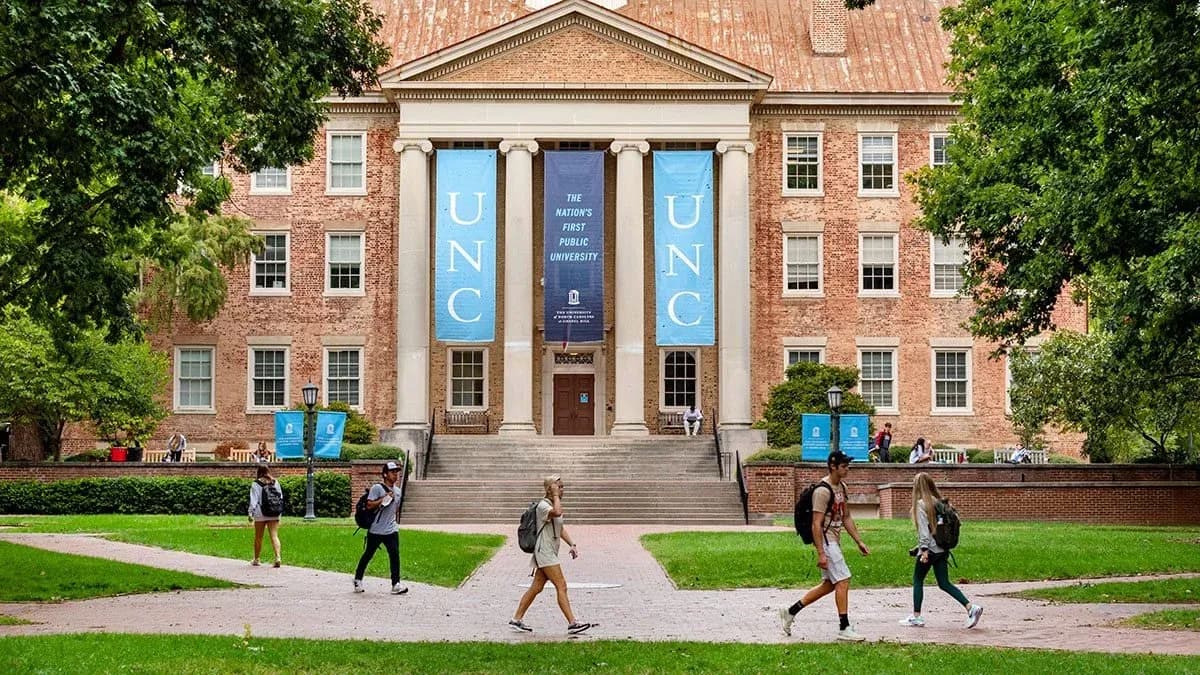

Sociology, Medical Sociology
The Sociology, Medical Sociology Bachelor of Arts program at the University of North Carolina explores how health, illness, and healthcare systems are deeply shaped by social, cultural, and structural forces. This interdisciplinary program provides students with tools to analyze how factors like race, class, gender, policy, and institutional dynamics influence medical outcomes and access to care. By combining classical sociological theories with focused study on health-related topics, students develop a rich understanding of social inequality, healthcare systems, and patient experiences across different populations. The program prepares students to critically assess public health challenges through a sociological lens.
Throughout their studies, students engage in courses that explore health disparities, healthcare institutions, global health systems, and ethical debates surrounding medical technology and treatment. The curriculum also emphasizes research methods, data interpretation, and critical thinking, equipping students with the ability to analyze patterns in healthcare access, disease prevalence, and policy implementation. Students are encouraged to explore topics such as mental health, aging, reproductive justice, chronic illness, and bioethics, while building communication and analytical skills essential for health-related fields. The program offers a well-rounded academic foundation for those seeking to understand the social dimensions of health and advocate for more equitable systems.
Key Facts
Key Facts
- Program Title: Sociology, Medical Sociology
- Degree Type: Bachelor of Arts
- Duration: 4 years
- Mode of Study: Full-time, On Campus
- Application Deadline: 01 February 2026
- Location: University of North Carolina at Chapel Hill, United States
- Field of Study: Sociology
- Language of Instruction: English
Program Structure
Year 1 – Introduction to Sociology and Health Contexts
• Introduction to Sociology
• Social Problems and Public Policy
• Introduction to Public Health
• Academic Writing in the Social Sciences
• Principles of Psychology or Anthropology
Year 2 – Social Institutions and Inequality
• Sociology of Health and Illness
• Medical Anthropology or Ethics in Healthcare
• Statistics for Social Science Research
• Social Stratification and Inequality
• Elective in Culture, Race, or Gender
Year 3 – Research, Theory, and Global Perspectives
• Sociological Theory
• Research Methods in Sociology
• Global Health and Society
• Health Policy and Social Justice
• Elective in Mental Health or Aging Studies
Year 4 – Applications, Fieldwork, and Capstone
• Advanced Seminar in Medical Sociology
• Internship in Health or Human Services
• Senior Capstone in Sociological Analysis
• Community-Based Research or Independent Study
• Sociology of Death, Dying, or Chronic Illness
Career Opportunities
Graduates of the Medical Sociology program are well-equipped to pursue careers at the intersection of healthcare and society, where understanding human behavior and social systems is essential. Many go on to work in public health agencies, healthcare nonprofits, community health organizations, or government institutions, supporting policy development, health education, and service coordination. Some graduates take on roles in research, healthcare administration, or social work, while others enter fields such as epidemiology, bioethics, patient advocacy, or global health coordination. The program also provides a strong foundation for those pursuing advanced degrees in sociology, public health, social work, or health policy. Employers increasingly seek individuals who can interpret health data, engage with diverse communities, and understand how structural inequality affects healthcare outcomes. This degree cultivates both the compassion and analytical precision necessary to drive change in healthcare systems and improve lives. In a world facing ongoing health crises and growing disparities, the ability to connect social theory with public health practice is a valuable and urgent skill set—making this program a strong choice for impact-driven, socially aware, and analytically skilled graduates.
Why Choose This Program
This program offers students the unique opportunity to explore how health is shaped not just by biology but by social structures, cultural norms, and institutional forces. Through an interdisciplinary and research-focused curriculum, students learn how to critically assess healthcare systems, analyze policy implications, and understand the lived experiences of marginalized groups in medical settings. The University of North Carolina provides students with opportunities for fieldwork, internships, and faculty-led research projects that apply classroom learning to real-world health issues. Small class sizes, faculty mentorship, and access to community partnerships make this a deeply engaging and relevant program for students committed to addressing inequality in healthcare. Whether your interests lie in health advocacy, public service, academic research, or global health, this program helps you build a path grounded in critical analysis, ethical responsibility, and sociological insight—equipping you to become a thoughtful leader in both health and society.
Contact Information
Phone: +1 (919) 966-3621
Email: unchelp@admissions.unc.edu
Address: Jackson Hall, 174 Country Club Road, Chapel Hill, NC 27514, USA
