.png&w=640&q=75)
Statistics and Data Science
Statistics and Data Science program provides students with a comprehensive understanding of data analysis, statistical theory, and computational methods. Over four years, students study probability, statistical modeling, data visualization, machine learning, and programming, gaining the knowledge and skills necessary to extract insights from complex datasets and support data-driven decision-making. The curriculum integrates theoretical study with hands-on projects, laboratory exercises, and collaborative research, allowing students to develop both analytical and practical expertise. Students also explore applications of statistics and data science in economics, health, social sciences, and technology, preparing them to address real-world challenges across multiple domains.
Through laboratory work, data analysis projects, internships, and research exercises, students gain practical experience in applying statistical models, designing experiments, and interpreting large-scale data. The program emphasizes problem-solving, analytical thinking, and computational proficiency, preparing graduates for careers in data analysis, statistical consulting, business intelligence, and research. Graduates leave with the ability to design experiments, implement data-driven solutions, and communicate findings effectively to support informed decision-making in academic, governmental, or industrial settings.
Key Facts
Key Facts
- Program Title: Statistics and Data Science
- Degree Type: Bachelor of Science
- Duration: 4 years
- Mode of Study: Full-time, On Campus
- Application Deadline: 01 December 2025
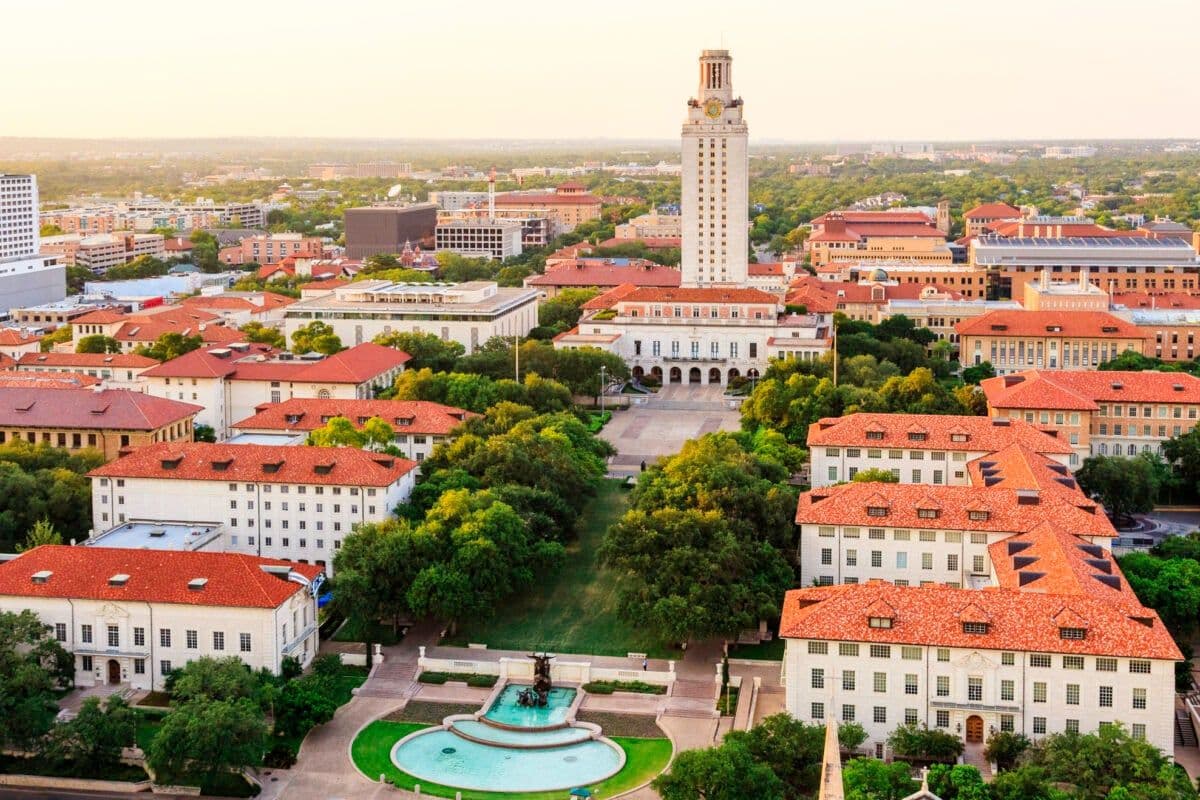
- Location: University of Texas at Austin, United States
- Field of Study: Statistics
- Language of Instruction: English
Program Structure
Year 1 – Foundations in Statistics and Data Science
- Introduction to Statistics
- Calculus and Linear Algebra
- Introduction to Programming (Python / R)
- Data Analysis and Visualization
Year 2 – Intermediate Statistical Methods
- Probability Theory
- Regression Analysis and Predictive Modeling
- Statistical Inference and Experimental Design
- Database Management and Data Processing
Year 3 – Advanced Analysis and Applied Projects
- Machine Learning and Artificial Intelligence Applications
- Multivariate and Time Series Analysis
- Applied Data Science Projects
- Electives in Economics, Health, or Social Data
Year 4 – Capstone Projects and Professional Preparation
- Independent Research / Thesis
- Internship in Data Science, Analytics, or Research Institutions
- Applied Data Analytics Project
- Professional Portfolio and Career Preparation
Career Opportunities
Graduates are prepared for careers in data analysis, business intelligence, statistical consulting, research, machine learning, data engineering, and analytics management. They may work in technology companies, financial institutions, government agencies, healthcare organizations, or research centers, applying their expertise to analyze data, generate insights, and guide decision-making. The program equips students with analytical skills, computational proficiency, research experience, and problem-solving abilities, enabling them to interpret complex datasets and provide actionable solutions. Graduates are also prepared for advanced studies in statistics, data science, machine learning, or applied mathematics.
Why Choose This Program
This program offers a comprehensive and applied approach to statistics and data science, combining theoretical knowledge with hands-on computational and analytical experience. Its curriculum fosters critical thinking, technical proficiency, and practical problem-solving skills while students engage in data projects, research, internships, and collaborative learning. Guided by experienced faculty and supported by access to modern data labs, software tools, and real-world datasets, students develop expertise in data modeling, statistical inference, and applied analytics. Graduates leave the program with strong analytical skills, technical mastery, and professional readiness, fully prepared for careers in data science, analytics, and research across various sectors.
Contact Information
For further information, please contact the admissions office at:
Phone: +1 (512) 471-3434
Email: gradadmissions@utexas.edu
Address: 110 Inner Campus Drive, Stop G1800, Austin, TX 78712, USA
