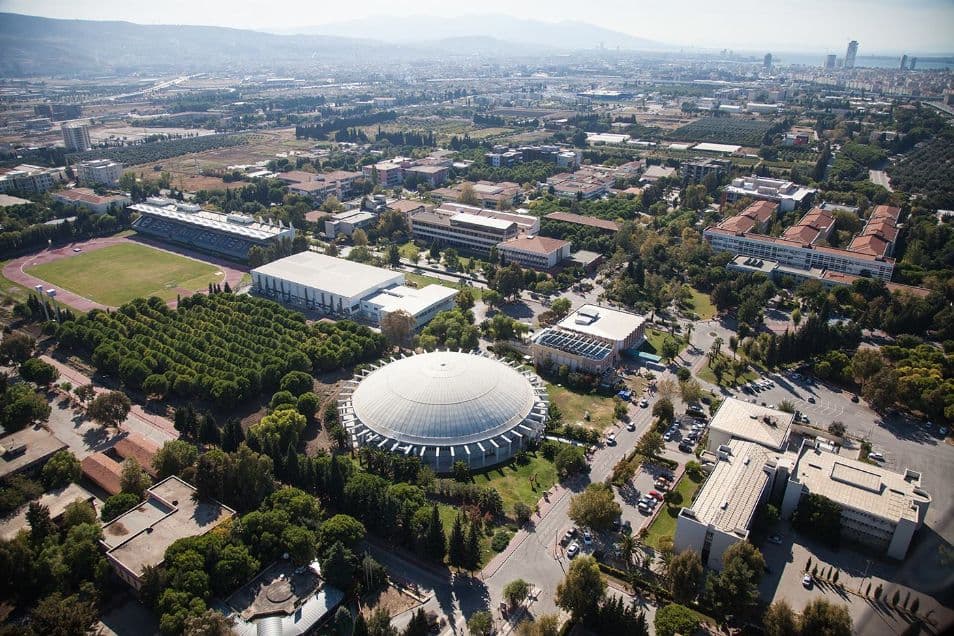

The Bachelor of Science in Textile Engineering (English) at Ege University is a four-year undergraduate program taught entirely in English, aiming to educate engineers with strong theoretical foundations and practical skills in textile science and technology. Students receive education in fundamental engineering sciences as well as specialized textile disciplines such as fiber science, yarn and fabric production, textile chemistry and finishing, nonwovens, technical textiles, and apparel-related processes. The program’s structure balances academic rigor with hands-on laboratory courses and industrial applications, preparing graduates for modern textile industry demands.
Located in İzmir under the Faculty of Engineering, the department is internationally accredited, a member of global textile-engineering networks, and committed to high-quality education standards. The English-medium curriculum, modern labs, and industry-oriented training enable students to acquire both global competencies and sector-specific expertise — ideal for careers in textile manufacturing, research, quality control, technical textile development or international textile trade.
Key Facts
Key Facts
- Degree: Bachelor of Science (B.Sc.)
- Standard period of study: 4 years (8 semesters)
- Location: İzmir
- Study Type: Undergraduate (full-time, international)
- Admission semester: Fall semester only
- Area of study: Textile Engineering, Materials Science, Textile Technology
- Admission modus: Without admission restriction
- Main language: English
Program Structure
Semester 1 – Foundations of Engineering & Fiber Science
- Calculus I / Mathematics & Basic Sciences
- Natural Fibers / Introduction to Fibers & Materials Science
- Basic Engineering / Physics / Chemistry courses
- University / General Education Requirement
Semester 2 – Core Textile & Engineering Basics
- Calculus II / Advanced Mathematics & Statistics
- Turkish Language & Atatürk’s Principles (for national core)
- Presentation and Reporting Techniques / Academic Skills
- General Education or Elective Course
Semester 3 – Material Science & Strength of Materials
- Material Science (focus on textile-relevant materials)
- Strength of Materials / Mechanics for Textile Engineers
- Statistics II / Quantitative Methods
- Introduction to Textile Chemistry
Semester 4 – Textile Chemistry & Processing Basics
- Textile Chemistry (dyeing, finishing fundamentals)
- Fundamental engineering and textile science consolidation
- Departmental or university elective
- General education / elective course
Semester 5 – Intermediate Textile Engineering & Electives
- Core textile-engineering courses (yarn/fiber/ fabric technology)
- Elective course / restricted elective or free elective
- Technical foundation or supporting course
- University elective or language elective
Semester 6 – Specialized Textile Technology – Nonwovens & Advanced Topics
- Nonwoven Technology
- Supporting elective or university elective
- Lab-based or applied textile course (as per curriculum)
- Elective or free elective / department elective
Semester 7 – Advanced Textile Engineering & Safety
- Technical Textiles (specialized course)
- Occupational Health & Safety in Textile / Industrial Safety Practices
- Departmental electives or specialization courses
- Restricted elective or elective course
Semester 8 – Final Year / Capstone & Electives
- Free/Restricted Electives / Advanced Specializations
- Departmental or university elective courses
- Final project / graduation requirements (if any)
- Professional Preparation / Portfolio / Graduation Requirements
Career Opportunities
Graduates are prepared for a variety of careers in the textile and apparel industry, including roles in textile production, quality control, R&D, technical textile development, non-woven materials, textile chemical processing, supply chain and manufacturing management, and apparel/garment manufacturing. They may also work in export/import, textile consultancy, sustainability and environmental impact assessment, and lab-based textile testing.
Why Choose This Program
Choosing Textile Engineering (English) at Ege University means enrolling in a department with a long-standing tradition, global recognition, and commitment to quality. The program is accredited by recognized engineering accreditation bodies, and the department is a member of international textile-engineering associations, ensuring education meets global standards.
Furthermore, with a fully English curriculum, modern laboratory facilities, and a balance of theoretical and practical education, students gain both technical engineering skills and industry-relevant expertise. The specialization options (textile technology, chemistry/finishing, apparel) offer flexibility depending on the student’s interests, making the program versatile and aligned with modern textile industry needs.
Contact Information
Faculty of Engineering – Student Advisory Service
Bornova Campus, 35040 Bornova / İzmir, Turkey
Tel: +90 232 311 27 51
Fax: +90 232 339 92 22
Email: teksek@mail.ege.edu.tr
Textile Engineering Department – Programme Contact
Ege University, Faculty of Engineering
Bornova Campus, 35040 Bornova / İzmir, Turkey
International Office – Ege University
Bornova Campus, 35040 Bornova / İzmir, Turkey
Tel: +90 232 311 10 10
Fax: +90 232 311 10 11
Email: internationaloffice@ege.edu.tr
