Masters in Germany: Requirements, Fees and How to Apply (2026)
A master's in Germany usually takes two years (four semesters) and needs a recognised bachelor's degree in a related subject, proof of English or German at the level the programme sets, and, for many international applicants, an application through uni-assist. Public universities in most states charge no tuition, only a semester contribution of a few hundred euros, but Baden-Württemberg charges non-EU students EUR 1,500 per semester and TUM in Bavaria charges EUR 4,000 or 6,000. For the visa you must also show EUR 11,904 a year in a blocked account.
This guide sets out the rules from the sources that make them: the German states' model regulation for degree programmes, uni-assist, the German Embassy in New Delhi, APS India, the residence law and university fee pages, all checked in October 2026. It is written for applicants from India, the US, Africa and the Middle East. For the Indian-specific route (APS, visa appointments) in more detail, see our step-by-step guide to studying in Germany for Indian students.

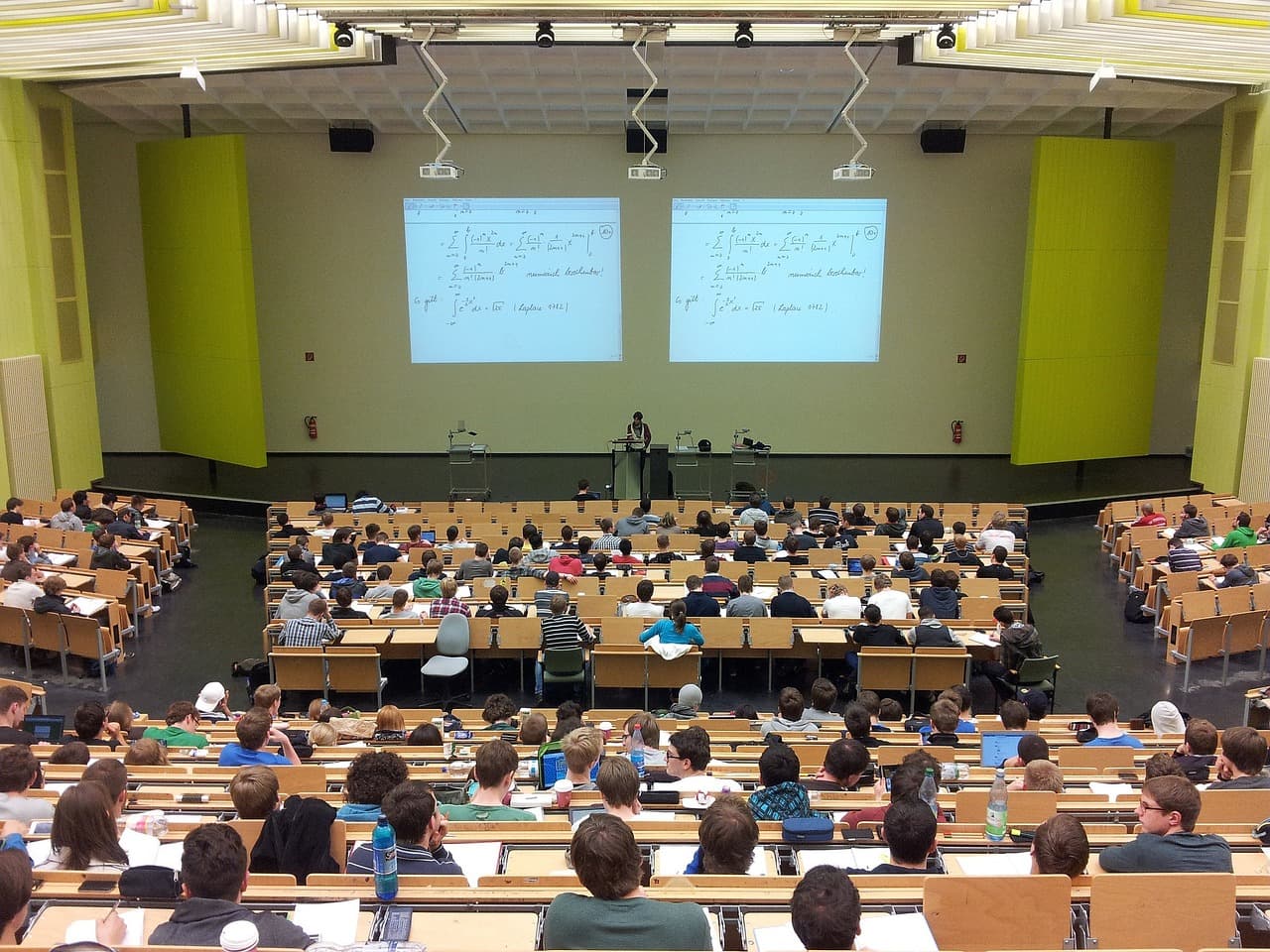
Photo: א (Aleph), CC BY-SA 2.5, via Wikimedia Commons
What are the requirements for a master's in Germany?
The legal minimum is a first degree that qualifies for a profession, normally a bachelor's. The model regulation agreed by the German states (KMK, version of 21 November 2024) sets that as the entry condition (section 5) and lets each state and university add more. In practice, programmes ask for:
- A bachelor's in the same or a closely related field. uni-assist says you "generally need to have completed undergraduate studies in a related subject". Some universities accept you before you graduate, but not all accept preliminary certificates.
- A minimum grade in some programmes, set by the university.
- Language proof in the language of instruction (see the IELTS section below).
- An APS certificate if your degree is from India. The APS India information leaflet (valid from June 2026) puts the fee at INR 18,000, non-refundable.
- Extras set by the programme: CV, motivation letter, module descriptions, GRE or an aptitude test, work experience.
From the summer semester 2027 intake, Indian applicants whose previous degree falls in fields listed by APS India also need the digital Master Test (dMAT), run by g.a.s.t. The fee is EUR 150. The affected fields had not been published when we checked; the first test was on 26 September 2026.
Consecutive vs non-consecutive master's
German law sorts every master's into one of two types (section 4 of the model regulation):
- Consecutive (konsekutiv): follows on from a bachelor's. It can deepen the same subject, broaden it, combine fields or move to a different one.
- Continuing education (weiterbildend): needs at least one year of relevant work experience after your first degree. It leads to the same qualification level and the same rights as a consecutive master's.
Both types end with a master's thesis worth 15 to 30 ECTS credits. If a programme asks for work experience, check which type it is, because that changes who can apply.
Can I do a master's in Germany with a three-year bachelor's degree?
Often yes, but you need to check. German rules count 180 ECTS credits for a bachelor's and expect 300 in total by the end of a master's (section 8). A three-year degree usually equals about 180 credits, so a one-year (60-credit) master's would leave you short. A four-semester (120-credit) master's adds up to 300.
The rule also lets a university admit an individual applicant who falls short of 300, if they have the required qualification. DAAD India notes that a four-year bachelor's from India, Bangladesh, Bhutan, Nepal or Sri Lanka is treated as equal to a German bachelor's. If your degree took three years, it advises contacting the course coordinator before you apply. The same check applies to any three-year degree, for example most bachelor's degrees from England.
Is a 1.7 GPA good in Germany?
Yes. German grades run from 1.0 (best) to 4.0 (lowest pass), so a 1.7 is in the "good" band. The University of Oldenburg says "very good" begins at 1.5. Programmes with a minimum grade publish it in their admission rules, so compare your converted grade with that number.
Universities convert your foreign grade with the modified Bavarian formula, as set out by the University of Oldenburg and the University of Passau:
German grade = 1 + 3 × (best possible grade − your grade) ÷ (best possible grade − lowest pass grade)
Here is a worked example. On a 10-point scale where 10 is the best and 4 is the lowest pass, an 8.5 converts to 1 + 3 × 1.5 ÷ 6 = 1.75. Passau keeps only one decimal place without rounding, so 1.75 becomes 1.7. Universities take the best and lowest pass grades for your institution from anabin, the official database for foreign qualifications, so the result can differ from what an online calculator shows. Our guide to GPA scales by country explains the systems you may be converting from.
Do I need IELTS for Germany?
You need IELTS, TOEFL or another recognised certificate for most English-taught master's, unless the university accepts a different proof. For the visa, the German Embassy in New Delhi asks for B2 English for an English-taught degree and accepts only recognised certificates, and Duolingo and the TOEFL home edition are not accepted. APS India says not to submit "medium of instruction letters". For German-taught programmes the embassy asks for C1 German.
DAAD's International Programmes database lists the international programmes taught fully or mainly in English, and DAAD India counts more than 2,000 of them.
Is a master's degree in Germany free?
At most public universities, yes, but every student pays a semester contribution, and two exceptions matter for non-EU students. These are the fees for 2026-27:
- Most states: no tuition at public universities. The semester contribution covers the student union, social services and usually a transport ticket. At the University of Hamburg it is EUR 402 for winter 2026-27, of which EUR 226.80 is the semester ticket.
- Baden-Württemberg (Heidelberg, KIT, Stuttgart, Freiburg and others): EUR 1,500 per semester for students from outside the EU/EEA. Exemptions include doctoral and exchange students and people legally resident in Germany for 15 months or more.
- Technical University of Munich: EUR 4,000 or 6,000 per semester for non-EU master's students until winter 2026-27, rising to EUR 4,600 or 6,800 from winter 2027-28. Students who completed their bachelor's in Germany are generally exempt.
- Private universities set their own fees, which are usually much higher.

Is 20 lakhs enough to study in Germany?
For a two-year master's at a tuition-free public university, INR 20 lakh covers the first year with room to spare, but not both years. These are the minimum figures, converted at the ECB rate of 21 October 2026 (EUR 1 = INR 106.13):
Minimum first-year cost, public university (2026-27 figures)
- Blocked account (visa proof): EUR 11,904 = about INR 12.63 lakh
- Tuition-free state, plus 2 semester contributions at Hamburg's EUR 402: EUR 12,708 = about INR 13.49 lakh in year one, EUR 25,416 = about INR 26.97 lakh for two years
- Baden-Württemberg, plus EUR 1,500 tuition per semester: from EUR 14,904 = about INR 15.82 lakh in year one, plus the local semester contribution
- TUM at EUR 4,000 or 6,000 per semester: EUR 19,904 to 23,904 = about INR 21.12 to 25.37 lakh in year one, plus the semester fee
- One-off fees for Indian applicants: APS INR 18,000, dMAT EUR 150 where it applies
Not sure your degree qualifies? Check your eligibility.
The blocked account is not a fee. You can withdraw up to EUR 992 a month to live on, so the money pays your rent and food. It is a legal minimum, not an estimate of what life costs in a given city.
How long is a master's degree in Germany?
Two, three or four semesters full time, under section 3 of the model regulation. With 30 ECTS credits per semester (section 8), a four-semester programme carries 120 credits and a two-semester one 60. A bachelor's and a consecutive master's together are planned as ten semesters (five years) of full-time study.
How to apply for a master's in Germany, step by step

- Shortlist programmes in DAAD's database or on our ranking of the best universities in Germany, then read each programme's admission rules. Universities such as the Technical University of Munich, RWTH Aachen and the University of Hamburg each publish their own requirements.
- Check the route: the university's own portal, or uni-assist. Each programme page says which one.
- Indian degree? Start APS (and the dMAT if your field is affected) first. You submit the dMAT certificate with your APS documents.
- Apply early. uni-assist says evaluation usually takes four to six weeks and advises applying at least eight weeks before the deadline. Master's deadlines are often earlier than bachelor's ones. DAAD India's timeline puts most winter-semester applications between March and June.
- After admission, open the blocked account, get health insurance from your arrival date, and book the visa appointment with your admission letter.
Can you work during and after a master's in Germany?
Yes. Under section 16b of the Residence Act, students may work up to 140 working days a year, and jobs as a student assistant at the university do not count towards that limit. After graduating, you can get a residence permit of up to 18 months to look for work (section 20 of the same act). More on the country is on our Germany page.
Next step
Shortlist three to five programmes and note each one's deadline, route (portal or uni-assist) and language test. Then follow our how to apply guide to put the documents together in order.