Master of Science · Full-time · On Campus
California Institute of Technology (Caltech)
Pasadena, United States
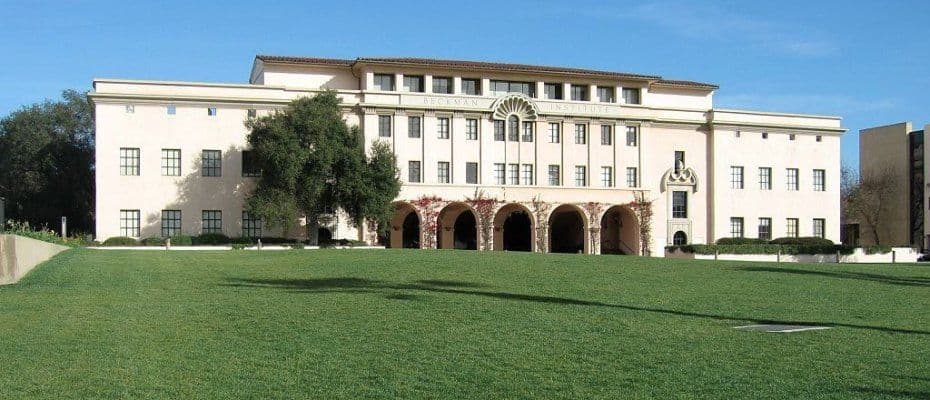
The Astrophysics Bachelor of Science program at the University of Caltech offers a rigorous scientific education focused on understanding the physical processes that govern celestial objects and cosmic phenomena. The curriculum provides deep training in classical mechanics, electromagnetism, quantum physics, and observational techniques, enabling students to analyze the structure and evolution of the universe with mathematical sophistication. Through theoretical coursework, laboratory experiments, and data-driven assignments, learners develop the ability to interpret astronomical observations with technical precision, construct models of cosmic systems, and explore the physical principles underlying stars, galaxies, and cosmological structures. This structured academic pathway ensures students build a strong foundation in both physics and astronomical science.
Students further benefit from Caltech’s world-class research environment, where astrophysics is deeply connected to physics, planetary science, computation, and advanced instrumentation. Access to cutting-edge observatories, simulation facilities, and advanced analytical tools allows learners to study exoplanets, stellar evolution, galaxy formation, and high-energy astrophysical processes. Working alongside faculty engaged in frontier astrophysics research helps students refine their understanding of cosmic systems and gain practical experience analyzing real astronomical datasets. This integration of observation, theory, and computation prepares graduates to engage with some of the most compelling questions in modern science.
Year 1 – Foundations of Physics & Astronomical Science
Year 2 – Core Astrophysics Principles
Year 3 – Applied Astrophysical Analysis
Year 4 – Advanced Topics & Capstone Research
Graduates of this program possess strong analytical, mathematical, and computational skills that prepare them for a wide range of scientific and technical careers. Many begin roles in astronomical observatories, research laboratories, aerospace companies, and technology firms, contributing to projects involving data analysis, instrumentation development, simulation modeling, and observational research. Their expertise allows them to work on topics such as star formation, orbital mechanics, cosmological modeling, and remote sensing technologies. Additional opportunities exist in education, science communication, government research agencies, and industries that require advanced quantitative reasoning. For those pursuing academic advancement, the program provides excellent preparation for master’s or doctoral studies in astrophysics, astronomy, physics, or related fields, supporting future careers in academia, scientific research, or space science leadership.
This program is an excellent choice for students seeking a deeply scientific education that strengthens their advanced analytical insight, enabling them to investigate cosmic phenomena through theory, observation, and computation. The University of Caltech offers a research-rich environment supported by expert faculty guidance, access to leading astronomical facilities, and interdisciplinary collaboration across the physical sciences. Students gain practical skills by working with real observational data, conducting simulations, and participating in research projects that mirror professional astrophysical inquiry. The flexible curriculum allows learners to specialize in areas such as cosmology, planetary science, stellar physics, or computational astrophysics. With its emphasis on scientific precision, large-scale analysis, and intellectual curiosity, the program prepares graduates for impactful careers in astrophysics or advanced academic study in top-tier research institutions.
For further information, please contact the admissions office at:
Phone: +1 626 395 3000
Email: admissions@caltech.edu
Address: University of Caltech, 1200 East California Boulevard, Pasadena, CA 91125, United States
Master of Science · Full-time · On Campus
California Institute of Technology (Caltech)
Pasadena, United States
Master of Science · Full-time · On Campus
California Institute of Technology (Caltech)
Pasadena, United States
Master of Science · Full-time · On Campus
California Institute of Technology (Caltech)
Pasadena, United States
Bachelor of Science · Full-time · On Campus
California Institute of Technology (Caltech)
Pasadena, United States
