Master of Science · Full-time · On Campus
California Institute of Technology (Caltech)
Pasadena, United States
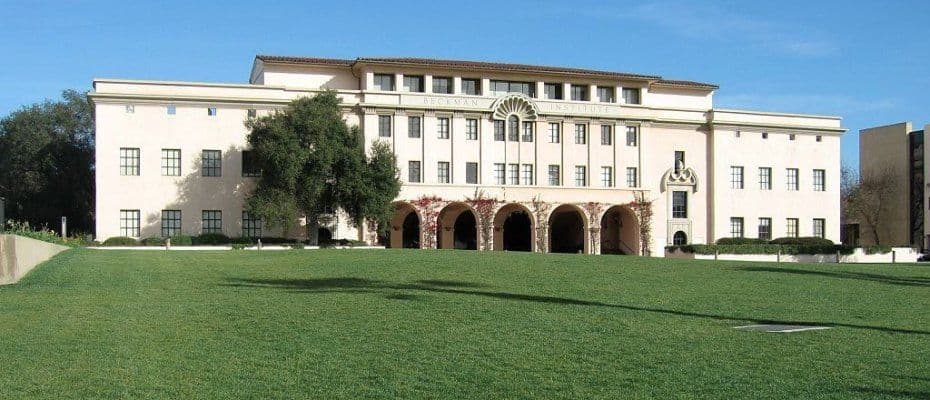
The Astrophysics Master of Science program at the University of Caltech offers an intensive academic experience designed to provide a deep understanding of the physical processes governing celestial objects and cosmic phenomena. The curriculum emphasizes advanced concepts in stellar physics, cosmology, observational techniques, and computational modeling, enabling students to analyze the universe using scientifically robust methods. Through coursework that integrates theoretical principles with data-driven approaches, learners develop the ability to interpret astrophysical measurements with technical precision and apply physical laws to both small-scale and large-scale cosmic structures. This structure ensures a strong grounding in the physics that underpins modern astrophysical research.
Caltech’s research environment enhances learning through interdisciplinary collaboration among physics, planetary science, and engineering departments. Students gain hands-on experience using observational data, simulation tools, and analytical frameworks that reflect current scientific practices. Access to state-of-the-art instruments and advanced computational resources allows learners to explore galaxies, star formation, cosmic evolution, and high-energy astrophysical processes while engaging in guided research projects. By working with faculty actively involved in cutting-edge discoveries, students strengthen their ability to examine cosmic dynamics with scientific rigor, preparing for impactful contributions in astronomy and astrophysics.
• Semester 1 – Foundations in Astrophysics
• Semester 2 – Advanced Astrophysical Systems & Research
Graduates of this program are equipped with strong analytical, observational, and computational skills that prepare them for a variety of roles in scientific and technology-driven fields. Many pursue careers in astronomical observatories, space research agencies, physics research laboratories, and data-intensive science organizations, where expertise in modeling, data interpretation, and scientific computation is essential. Their training enables them to work on projects involving cosmic structure analysis, instrument development, simulation of astrophysical systems, and interpretation of observational datasets collected from ground-based or space telescopes. Industries related to satellite technology, scientific software development, and advanced analytics also value professionals with a strong background in astrophysics and quantitative physics. Those interested in academia find that the program provides a robust foundation for doctoral studies in astrophysics or physics, supporting future roles in university-level research, teaching, and theoretical modeling.
This program is an excellent choice for students seeking a research-focused education that combines rigorous physical theory with practical scientific development, allowing them to explore the universe through both observational and computational approaches. The University of Caltech offers a rich scientific environment shaped by expert faculty guidance, access to leading research facilities, and collaboration across cutting-edge astronomical projects. Students benefit from working directly with real astrophysical data, building cosmological models, and applying techniques that reflect the forefront of modern astrophysics. The curriculum’s balanced structure supports both broad learning and targeted specialization, enabling students to focus on areas such as stellar physics, cosmology, or high-energy systems. With its emphasis on advanced scientific insight, precision, and innovation, this program prepares graduates for impactful careers in scientific institutions or for continued academic advancement at the doctoral level.
For further information, please contact the admissions office at:
Phone: +1 626 395 3000
Email: admissions@caltech.edu
Address: University of Caltech, 1200 East California Boulevard, Pasadena, CA 91125, United States
Master of Science · Full-time · On Campus
California Institute of Technology (Caltech)
Pasadena, United States
Bachelor of Science · Full-time · On Campus
California Institute of Technology (Caltech)
Pasadena, United States
Master of Science · Full-time · On Campus
California Institute of Technology (Caltech)
Pasadena, United States
Bachelor of Science · Full-time · On Campus
California Institute of Technology (Caltech)
Pasadena, United States
