Master of Arts · Full-time · On Campus
University of Rostock
Rostock, Germany
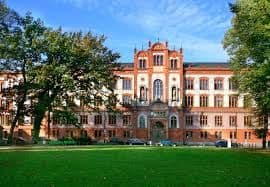
The Master of Science in Computational Engineering is a full-time graduate program offered by the University of Rostock. Designed for students aiming to deepen their expertise in computational methods, software concepts, applied mathematics, and data-driven engineering, this program provides a rigorous academic and practical foundation for careers in modern engineering fields. With a strong focus on numerical simulation, data management, and visualization, the curriculum equips students with advanced skills essential for addressing contemporary engineering challenges. The course extends across four semesters and offers admission in both the summer and winter semesters.
Located in Rostock, one of northern Germany’s leading academic hubs, the program emphasizes innovation, analytical problem-solving, and interdisciplinary competence. Students benefit from a technologically advanced learning environment and a curriculum that bridges engineering, computer science, and mathematical modeling. Reflecting Germany’s excellence in engineering education, this program is an ideal choice for those wishing to specialize in computational approaches within engineering contexts.
Semester 1 – Foundations of Computational Engineering
Semester 2 – Simulation & Engineering Applications
Semester 3 – Advanced Engineering & Specialization
Semester 4 – Master’s Thesis & Final Research Project
Graduates of this program are well-prepared for careers across engineering, IT, research institutions, and technology-driven industries. With expertise in simulation, computation, and data analysis, students can pursue roles such as computational engineer, software developer, simulation specialist, data engineer, or research associate. The program’s strong technical foundation and interdisciplinary approach provide graduates with excellent opportunities in both industry and academia, particularly in sectors prioritizing innovation, modeling, and digital engineering.
Choosing the Master of Science in Computational Engineering means entering a program that blends advanced engineering theory with practical computational techniques. The University of Rostock offers an innovative academic environment supported by expert faculty and modern research facilities. With a curriculum emphasizing computational problem-solving and engineering applications, students develop the analytical and technical skills needed for success in a rapidly evolving technological world.
The program’s comprehensive focus on software concepts, mathematical modeling, and data-driven engineering ensures that graduates are prepared to contribute to cutting-edge developments in simulation, digital engineering, and computational research. Its strong interdisciplinary orientation makes it an excellent choice for students seeking a future-oriented engineering qualification.
University of Rostock – Student Advisory Service
Student Service Center
Parkstraße 6
18057 Rostock, Germany
Tel: +49 381 498-1230
Email: studium@uni-rostock.de
Web: Student advisory service
International Office – Rostock International House (RIH)
Kröpeliner Straße 29
18055 Rostock, Germany
Tel: +49 381 498-1209
Fax: +49 381 498-1107
Email: info.rih@uni-rostock.de
Web: International office
Master of Arts · Full-time · On Campus
University of Rostock
Rostock, Germany
Bachelor of Education · Full-time · On Campus
University of Rostock
Rostock, Germany
Master of Science · Full-time · On Campus
Magdeburg-Stendal University
Magdeburg, Germany
