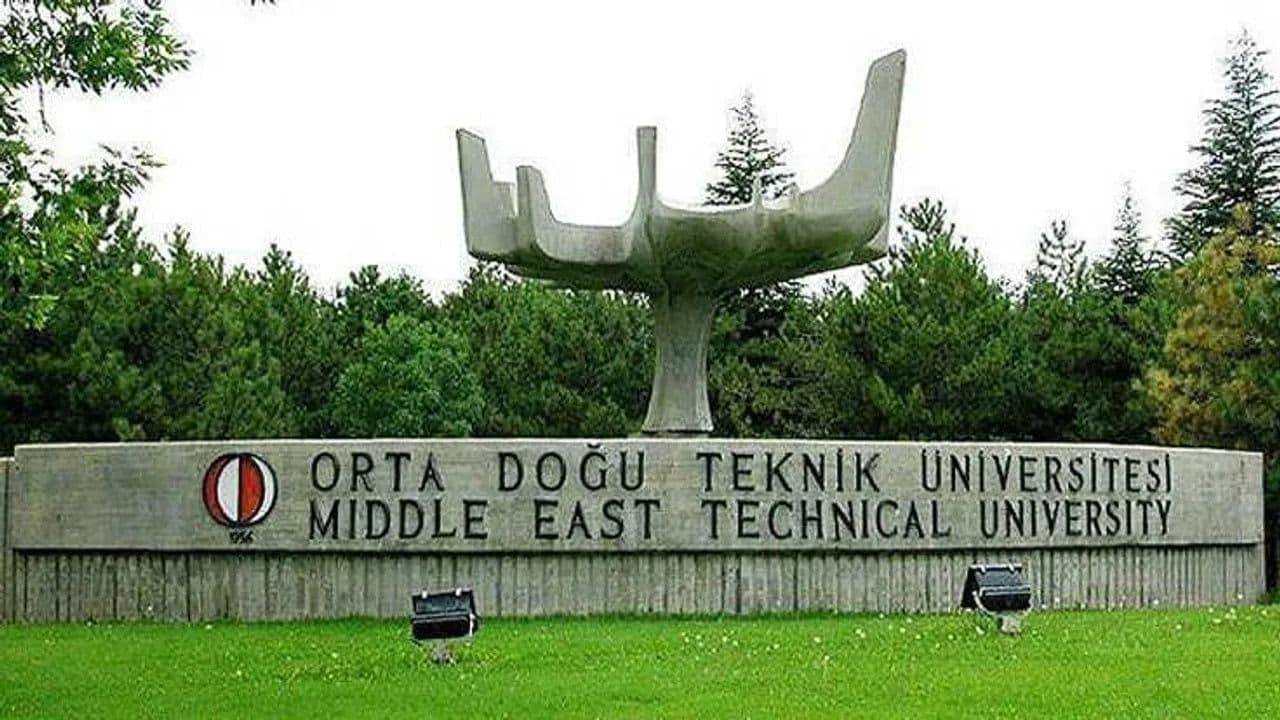

The Bachelor of Science in Economics at METU is an undergraduate program designed to give students a strong grounding in economic theory, quantitative analysis, and empirical methods. The curriculum combines rigorous courses in microeconomics, macroeconomics, econometrics, statistics and mathematics with applied economics topics like development economics, public economics, and international economics. Through lectures, workshops and analytical assignments, students gain the ability to understand, analyze and interpret economic phenomena, formulate economic policies, and evaluate data — preparing them for roles in academic research, public policy, finance, business, or further studies.
Located in Ankara at METU’s Faculty of Economics and Administrative Sciences, the program offers an English-medium education with a balance between theoretical depth and practical application. With access to quantitative courses and broad elective options, students build strong analytical, critical thinking and methodological skills, enabling them to engage with economic issues at national and global level. The program is ideal for those interested in economics, policymaking, research, or business.
Key Facts
Key Facts
- Degree: Bachelor of Science (B.Sc.) in Economics
- Standard period of study: 8 semesters
- Location: Ankara
- Study Type: Undergraduate (full-time, English-medium)
- Admission semester: Fall semester
- Area of study: Economic Theory, Econometrics, Quantitative Methods, Public & International Economics, Economic Policy, Finance & Development Economics
- Admission modus: Regular undergraduate admissions
- Main language: English
Program Structure
Semester 1 – Foundations of Economics & Mathematics
- Introduction to Economics I (Microeconomics)
- Calculus I / Quantitative Mathematics
- Introductory Statistics / Quantitative Methods
- Academic English / Foundation Courses
Semester 2 – Core Economic Principles & Quantitative Tools
- Introduction to Economics II (Macroeconomics)
- Calculus II / Mathematics for Economics
- Statistics & Decision Methods for Social Sciences
- Supporting / Elective Courses
Semester 3 – Intermediate Economics & Quantitative Methods I
- Microeconomic Theory I
- Macroeconomic Theory I
- Econometrics I / Statistical Economics
- Mathematics for Economists / Linear Algebra or equivalent
- Supporting / Elective Courses
Semester 4 – Intermediate Economics & Quantitative Methods II
- Microeconomic Theory II
- Macroeconomic Theory II
- Econometrics II / Advanced Quantitative Methods
- Economic History or Development Economics (foundation course)
- Elective / Supporting Courses
Semester 5 – Applied Economics & Specialization I
- Public Economics or Public Finance
- International Economics or Trade & Global Economics
- Elective Courses (e.g. labor economics, environmental economics, policy analysis)
- Quantitative / Statistical / Econometric Laboratory or Seminar
Semester 6 – Applied Economics & Specialization II
- Development Economics or Comparative Economics
- Monetary Economics / Finance & Financial Economics or Economic Policy
- Elective Courses according to interest
- Research Methods / Data Analysis / Applied Economics Seminar
Semester 7 – Advanced Topics & Electives
- Advanced electives (e.g. econometrics, public policy, environmental economics, international economics)
- Research Project Preparation / Independent Study
- Elective Courses
Semester 8 – Graduation Project & Final Specialization
- Senior Thesis or Capstone Economic Analysis Project / Research Study
- Elective Courses selected by student
- Preparation for graduation, potential further academic or professional paths
Career Opportunities
Graduates are well-prepared for careers in economics research, public policy, finance, banking, consulting, economic analysis, governmental and international institutions, business analytics, or continue with graduate studies (M.Sc. / Ph.D.) in economics or related fields. They may work as economists, analysts, policy advisors, financial analysts, consultants, researchers, or enter private and public sector roles requiring strong economic and analytical skills.
Why Choose This Program
Choosing Economics at METU offers a comprehensive education combining economic theory, rigorous quantitative training, and flexible electives. Students develop strong analytical, mathematical and methodological competence, allowing them to understand complex economic phenomena, interpret data, and contribute to policy or business decisions.
The program’s balance of theory and application, together with English-medium instruction and broad specialization options, make it an excellent choice for those aiming for academic careers, public service, or roles in finance, consultancy, or international institutions.
Contact Information
Middle East Technical University – Faculty of Economics and Administrative Sciences / Department of Economics
Dumlupınar Boulevard No:1, 06800
Çankaya, Ankara, Türkiye
Tel: +90 312 210 2000
Email: economics@metu.edu.tr
Department of Economics – Student Affairs Office
Faculty of Economics and Administrative Sciences, METU
06800 Ankara, Türkiye
Tel: +90 312 210 2001
Email: economics-undergrad@metu.edu.tr
International Office – Middle East Technical University
METU Campus, 06800
Çankaya, Ankara, Türkiye
Tel: +90 312 210 1060
Email: ico@metu.edu.tr
