Bachelor of Science · Full-time · On Campus
Ankara University
Turkey
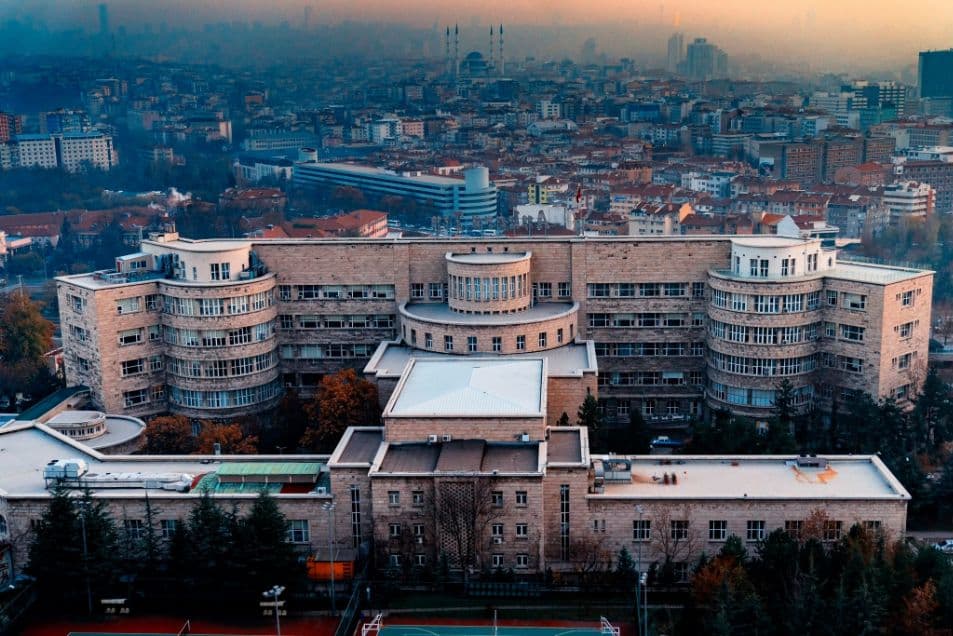
The Energy Systems Engineering programme at Ankara University is a modern undergraduate degree taught entirely in English. Established recently and located at the 50th Year Campus, the programme aims to train engineers who can integrate fundamental science with engineering to address global energy challenges. Students learn about energy production systems, renewable energy technologies, energy materials, and system design — combining theoretical courses with practical, interdisciplinary training. The curriculum emphasizes innovation, sustainability, and efficient energy solutions, preparing graduates for roles in energy generation, system design, research and development, and environmental technologies.
Situated in Ankara — a central academic and engineering hub — this programme benefits from the university’s engineering infrastructure, experienced faculty, and access to modern laboratory and research facilities. With its interdisciplinary structure spanning physics, chemistry, mechanical and electrical engineering fundamentals — all taught in English — the programme offers students a global-level engineering education tailored to current and future demands in energy, environment and technology.
Semester 1 – Foundations of Energy and Basic Sciences
Semester 2 – Mathematics & Computation Foundations
Semester 3 – Core Energy Systems & Physical Foundations
Semester 4 – Applied Energy & System Design
Semester 5 – Energy Systems Engineering & Technology Integration
Semester 6 – Advanced Energy Technologies & R&D Preparations
Semester 7 – Professional Training & Project Work
Semester 8 – Graduation Project & Final Preparation
Graduates of this programme are prepared for careers in energy generation and distribution, renewable energy systems design, energy consulting, environmental and sustainability sectors, power plant engineering, energy materials development, energy efficiency analysis, research and development, and governmental or private energy-environment institutions. They may also continue with graduate studies (M.Sc./Ph.D.) or work in multidisciplinary teams focused on sustainable energy and technology innovation.
Choosing Energy Systems Engineering at Ankara University means enrolling in a programme that combines engineering fundamentals with energy science and sustainability, taught entirely in English with a global perspective. The curriculum’s interdisciplinary nature — blending mechanical, chemical, electrical engineering and environmental science — equips students with versatile skills to address modern energy challenges.
The department’s modern laboratories, emphasis on renewable and efficient energy systems, and integration of design, analysis, and real-world energy problems make it an ideal choice for those seeking a future-oriented engineering education in energy, sustainability, and technological innovation.
Ankara University – Faculty of Engineering
Department of Energy Systems Engineering
50th Year Campus, Bahçelievler Mh., 06830 Gölbaşı, Ankara, Türkiye
Tel: +90 312 203 33 00
Fax: +90 312 212 74 64
Email: energy@eng.ankara.edu.tr
Student Affairs – Faculty of Engineering
50th Year Campus, Ankara, Türkiye
Tel: +90 312 203 33 00 (Ext. 1204)
Fax: +90 312 212 74 64
Email: ogrenciisleri@eng.ankara.edu.tr
International Office – Ankara University
Dögol Caddesi, 06100 Tandoğan, Ankara, Türkiye
Tel: +90 312 212 60 40
Fax: +90 312 213 67 47
Email: international@ankara.edu.tr
Bachelor of Science · Full-time · On Campus
Ankara University
Turkey
Bachelor of Science · Full-time · On Campus
Ankara University
Turkey
Doctor of Philosophy · Full-time · On Campus
Ankara University
Turkey
Master of Science · Full-time · On Campus

University of Trento
Trento, Italy
