Bachelor of Science · Full-time · On Campus

Ankara University
Turkey
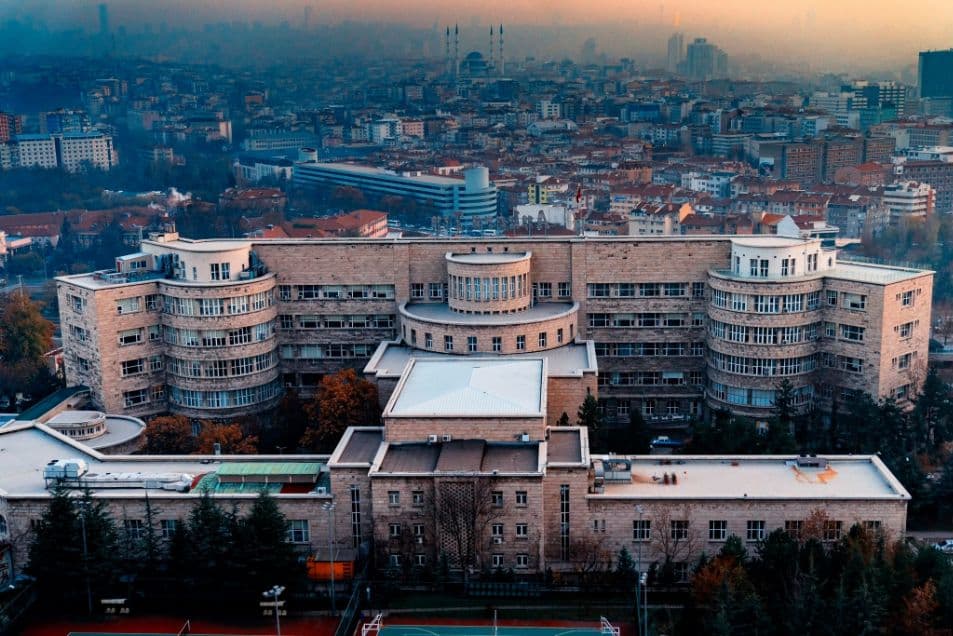
The Geophysical Engineering programme at Ankara University offers an interdisciplinary undergraduate education that merges physics, geology, mathematics and engineering to study the Earth’s structure, properties, and subsurface phenomena. The programme is designed for students who wish to develop the skills to analyze physical and geological data, understand seismic, magnetic, gravitational and electrical properties of the Earth, and apply this knowledge in resource exploration, environmental studies, and geotechnical assessments. Students receive solid training in mathematics, physics, computer-assisted modeling, field measurements and data interpretation, preparing them for careers that require both scientific insight and engineering competence.
The program spans eight semesters and aims to produce versatile engineers capable of contributing to geophysical research, natural resource exploration, environmental monitoring, and engineering projects. Based in Ankara — Turkey’s academic and scientific center — this programme benefits from modern laboratories, research-oriented faculty, and a curriculum blending theoretical foundations with practical fieldwork and data-analysis training. The educational environment at Ankara University encourages scientific inquiry, multidisciplinary collaboration, and real-world problem solving, making this programme a strong choice for students passionate about Earth sciences, engineering, and environmental challenges.
Semester 1 – Foundations: Mathematics, Physics & Geoscience
Semester 2 – Core Physical Sciences & Earth Physics Basics
Semester 3 – Intermediate Geophysics & Data Methods
Semester 4 – Earth Physics & Instrumentation
Semester 5 – Applied Geophysics & Environmental Focus
Semester 6 – Advanced Geophysical Methods & Analysis
Semester 7 – Field Work, Research & Practical Training
Semester 8 – Graduation Project & Professional Preparation
Graduates of this programme are qualified to work as geophysical engineers, exploration specialists, environmental consultants, resource survey analysts, research scientists, or in geotechnical and civil engineering projects. They may find roles in mining and natural resource companies, environmental and groundwater agencies, energy and petroleum sector, geological survey organizations, academic and research institutions, and consulting companies focusing on subsurface investigations and environmental assessments.
Choosing Geophysical Engineering at Ankara University means enrolling in a programme that blends physics, geology, engineering and computational skills — offering a unique perspective on Earth sciences and applied geophysics. The curriculum’s combination of theoretical physics, geology, fieldwork, data analysis and practical engineering prepares students for complex problems related to natural resources, environment, energy, and geological risk assessment.
The department’s commitment to combining academic rigor with practical, real-world training — including field surveys, data modeling and interdisciplinary collaboration — ensures its graduates are versatile, well-trained professionals ready for both national and global demands in geophysics, environment and earth sciences.
Ankara University – Faculty of Engineering
Department of Geophysical Engineering
50th Year Campus, Bahçelievler Mah., 06830 Gölbaşı, Ankara, Türkiye
Tel: +90 312 203 33 00
Fax: +90 312 212 74 64
Email: geop@eng.ankara.edu.tr
Student Affairs – Faculty of Engineering
50th Year Campus, Ankara, Türkiye
Tel: +90 312 203 33 00 (Ext. 1204)
Fax: +90 312 212 74 64
Email: ogrenciisleri@eng.ankara.edu.tr
International Office – Ankara University
Dögol Caddesi, 06100 Tandoğan, Ankara, Türkiye
Tel: +90 312 212 60 40
Fax: +90 312 213 67 47
Email: erasmus@ankara.edu.tr
Bachelor of Science · Full-time · On Campus
Ankara University
Turkey
Bachelor of Science · Full-time · On Campus
Ankara University
Turkey
Doctor of Philosophy · Full-time · On Campus
Ankara University
Turkey
