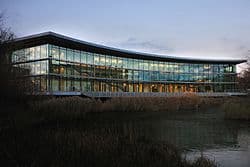

Key Facts
- University Type: Public
- Established: 1965
- Location: Düsseldorf, North Rhine-Westphalia, Germany
- International Students: 12%
- Specialization: Medicine, Natural Sciences, Humanities, Law, Business Administration
- Campuses: 1 (main campus in Düsseldorf)
History & Foundation
Heinrich Heine University Düsseldorf (HHU) was founded in 1965 in Düsseldorf, North Rhine-Westphalia, Germany. It originated from the Düsseldorf Medical Academy, established in 1907, which later formed the university’s medical faculty. Over the decades, HHU has grown into a comprehensive research university, combining medicine, natural sciences, humanities, law, and business administration.
HHU has a strong tradition of research excellence and interdisciplinary collaboration, with numerous international partnerships and research centers. As one of Germany’s leading universities, it integrates teaching and research to address societal challenges and foster innovation. Today, HHU is recognized for its high academic standards, global outlook, and commitment to social responsibility.
Education & Research
Heinrich Heine University Düsseldorf (HHU) offers an innovative learning environment shaped by more than 700 distinguished academics. With its specialisation in medicine, natural sciences, humanities, law, and business administration, the university provides in-demand programs such as Medicine, Molecular Life Sciences, Law, Economics, and Social Sciences.
The university’s strong research culture is supported by:
- State-of-the-art laboratories equipped for advanced research
- Multiple research and application centres, including university hospitals and clinical facilities
- A dedicated research funding program supporting interdisciplinary and international projects
- Partnerships with leading institutions worldwide, allowing students to gain hands-on experience and engage in real-world research initiatives
Through collaborations with institutions such as University Hospital Düsseldorf, Max Planck Institutes, and international partner universities, students have the opportunity to participate in clinical studies, innovative experiments, and applied research projects, ensuring practical experience alongside academic learning.
Student Life & Global Opportunities
Beyond academics, Heinrich Heine University Düsseldorf (HHU) fosters a dynamic campus culture with numerous student organizations, sports clubs, and cultural initiatives. The university maintains Erasmus+ and international exchange agreements with over 300 partner universities worldwide. Students benefit from a global learning network, international internships, and career development programs, preparing them for impactful roles in medicine, science, law, business, and society.
Contact Information
