What Is an Honours Degree? Meaning in the UK, India, Australia and the US
An honours degree is a bachelor's degree that requires more study, or a higher standard, than an ordinary bachelor's degree in the same system. In England it is the standard three-year degree (360 credits). In Scotland it takes four years. In India it means the new four-year undergraduate degree, and in Australia it is usually an extra year of research after a three-year bachelor's. What "honours" means on your certificate depends on the country that awarded it, and that changes how universities abroad read it.
This guide explains each system from the official frameworks: the UK's Quality Assurance Agency (QAA), India's University Grants Commission (UGC), an Australian university policy and US university registrars. All were checked in October 2026.

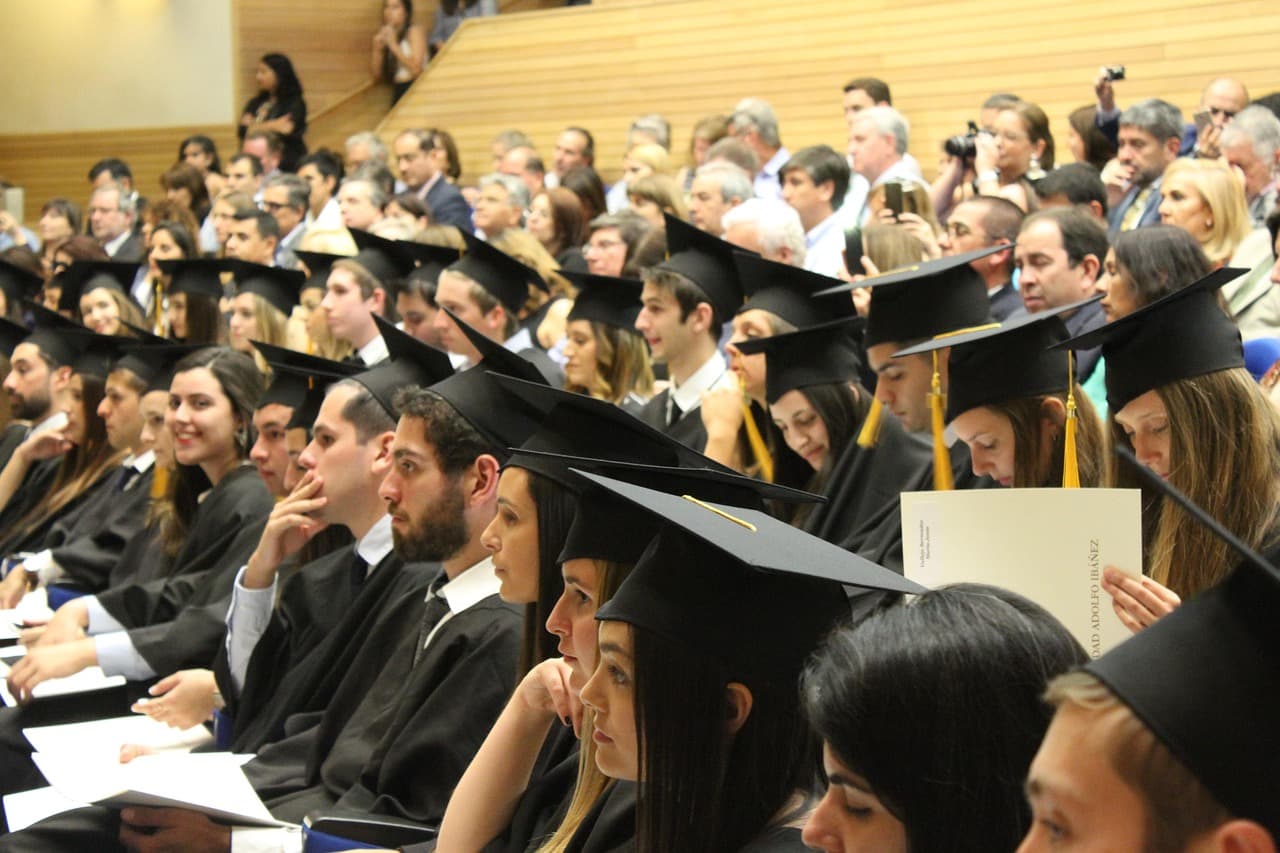
Photo: LornaMCampbell, CC BY-SA 4.0, via Wikimedia Commons
What does honours mean on your degree?
"Honours" (written "Hons", as in BA (Hons) or BSc (Hons)) means you completed the full honours programme and met its standard. Depending on the country, that can mean a larger volume of credits, an extra year, a research project, or a classified result such as First-class or 2:1.
It does not mean you studied in a special stream for top students. That is closer to the American use of "honors", covered further down. It also does not make the degree a postgraduate qualification: an honours degree is still an undergraduate degree everywhere in this guide.
Honours degrees in England, Wales and Northern Ireland
In England, Wales and Northern Ireland the honours degree is the standard bachelor's degree: the QAA says bachelor's degrees with honours "form the largest group of higher education qualifications". According to the QAA's Frameworks for Higher Education Qualifications of UK Degree-Awarding Bodies (2024 edition), a bachelor's degree with honours:
- sits at Level 6 of the FHEQ (the framework for England, Wales and Northern Ireland),
- typically carries 360 credits, at least 90 of them at Level 6,
- usually takes three years of full-time study.
A bachelor's degree without honours, called an Ordinary degree or a Pass degree, has fewer credits: typically 300, with 60 at Level 6. The QAA says Ordinary degrees are awarded as pass, merit or distinction, or as a fail, and are "not classified in the same way as honours degrees". Students who take the full honours course but do not pass every assessment can be given an Ordinary or Pass degree instead.
Honours degree classes
Honours degrees are classified into four outcomes, which the QAA framework describes in an annex:
- First-class honours (1st)
- Upper second-class honours (2:1 or 2.1)
- Lower second-class honours (2:2 or 2.2)
- Third-class honours (3rd)
A Third is the minimum standard for an honours degree. For the percentage bands behind each class, what a 2:1 is worth to employers, and US GPA equivalents, see our UK grading system guide.
Scotland: why an honours degree takes four years
Scottish universities use a separate framework (the FQHEIS, part of the Scottish Credit and Qualifications Framework). The QAA notes that honours degrees "are typically four years in Scotland" because of how Scottish schooling is structured, against three years elsewhere in the UK.
- Bachelor's degree with honours: SCQF Level 10, typically 480 credits (at least 90 at Level 10), about four years full-time.
- Bachelor's (non-honours) degree: SCQF Level 9, typically 360 credits, about three years.
Two details often confuse international applicants. First, in a small number of Scottish universities some faculties title the four-year honours degree "MA (Hons)". In the QAA framework this is a first degree at the same level as a BA (Hons) or BSc (Hons), not a master's. Second, the QAA calls the honours degree "the recognised 'normal' entry requirement to postgraduate study". So the four-year route is the one to choose if you plan a master's later.
If you are looking at Scotland, the University of Edinburgh, the University of Glasgow and the University of Aberdeen all follow this four-year honours model. EduRank's best universities in the United Kingdom list compares them with the rest of the UK.
What is an honours degree in India?
In India, "honours" now means a four-year undergraduate degree. The UGC's Curriculum and Credit Framework for Undergraduate Programmes (notified in December 2022 under NEP 2020) sets out these awards:
- UG certificate: exit after year 1 with 40 credits, plus a 4-credit vocational course in the summer.
- UG diploma: exit after year 2 with 80 credits, plus a 4-credit vocational course.
- 3-year UG degree: 120 credits in the major discipline.
- 4-year UG degree (Honours): 160 credits over eight semesters.
- 4-year UG degree (Honours with Research): for students who score 75% or more in the first six semesters. They complete a research project or dissertation in the major subject, and 12 of their 160 credits come from it.
Under the framework, students who exit with a certificate or diploma can re-enter within three years and must finish the degree within seven years. Departments offering the research route need at least two permanent faculty members recognised as PhD supervisors.
Many universities, including the University of Delhi, awarded three-year B.A. (Hons) and B.Sc. (Hons) degrees before this framework. If you hold one of those, an admissions office abroad will look at your transcript's years and credits, not just the word "Hons".

Photo: Ravi Dwivedi, CC BY-SA 4.0, via Wikimedia Commons
Can you do a PhD after a four-year honours degree in India?
Yes, if your marks are high enough. The UGC (Minimum Standards and Procedures for Award of Ph.D. Degree) Regulations, 2022, published in the Gazette of India on 7 November 2022, accept candidates who completed a four-year/eight-semester bachelor's degree with at least 75% marks in aggregate or an equivalent grade. A 5% relaxation applies to SC/ST/OBC (non-creamy layer), differently-abled, EWS and other categories the Commission specifies. The same regulations recognise a one-year master's after a four-year bachelor's degree, while three-year degree holders need a two-year master's. For how doctorates differ around the world, see doctoral degree vs PhD.
Honours in Australia: an extra year at AQF Level 8
In Australia, the honours degree sits at Level 8 of the Australian Qualifications Framework (AQF), one level above the ordinary bachelor's degree (Level 7). The University of the Sunshine Coast's Bachelor Honours Degree – Academic Policy (last amended 19 May 2025) shows the two usual routes:
- End-on honours: 96 units of AQF Level 8 study, usually one full-time year taken after you finish a three-year bachelor's degree.
- Embedded honours: a bachelor's programme of four or more years (at least 384 units) that meets Level 8 requirements across the whole programme.
UniSC grades honours by percentage: Class I for 80–100%, Class IIA for 70–79%, Class IIB for 60–69% and Class III for 50–59% (on the embedded route, 50–59% is "Honours, unclassified"). Other Australian universities set their own unit counts and grade bands, so check the policy of the university you apply to.

"Honors" in the United States: Latin honours, not a separate degree
American universities do not award an "honours degree" as a separate qualification. "Graduating with honors" usually means Latin honours (cum laude, magna cum laude, summa cum laude), added to a normal bachelor's degree for a high GPA. Each university sets its own rules:
- University of Cincinnati: cum laude for a GPA of 3.60–3.7499, magna cum laude for 3.75–3.8999 and summa cum laude for 3.90–4.0, with at least 60 semester credits earned at the university.
- Vanderbilt University: cutoffs move each year. Summa cum laude goes to students whose GPA matches the top 5% of the previous three years' graduating seniors, magna to the next 8% and cum laude to the next 12%.
Many US universities also run honors colleges or honors programmes, with smaller classes and often a senior thesis. Their requirements vary by university. Our US grading system guide explains how the GPA behind Latin honours is calculated.
Honours degree vs bachelor degree: which is better?
An honours degree is the better choice if you plan to do postgraduate study, because in several systems it is the expected entry route:
- In the UK and Scotland, the QAA calls the honours degree the normal entry requirement for postgraduate study.
- In India, the four-year honours degree (with 75%) opens direct PhD entry and one-year master's programmes.
- In Australia, honours is a Level 8 qualification, one AQF level above the three-year bachelor's degree.
If you want to start work straight after graduating, a three-year ordinary or non-honours degree costs a year less and is a recognised qualification. In Scotland the QAA describes the non-honours degree as an entry requirement to a number of professions. Some countries treat three-year degrees differently for master's admission, so check before you choose. See masters in Germany for how a three-year bachelor's is assessed there.
Is an honours degree the same as a master's degree?
No. An honours degree is an undergraduate qualification in every system above, including the Scottish MA (Hons). It can shorten a later master's (a one-year master's after India's four-year degree), but it does not replace one.
Honours or honors: what is the difference?
Only the spelling. "Honours" is British, Indian and Australian spelling, and "honors" is American. The meaning comes from the system, not the spelling: a UK BSc (Hons) is a degree classification, while a US "with honors" is a distinction on top of a degree.
Honours degrees at a glance (official frameworks, checked October 2026)
- England, Wales, N. Ireland: FHEQ Level 6, typically 360 credits, 3 years; ordinary degree 300 credits (QAA 2024).
- Scotland: SCQF Level 10, typically 480 credits, 4 years; non-honours degree 360 credits, 3 years (QAA 2024).
- India: 4-year UG (Honours) 160 credits; Honours with Research needs 75% in semesters 1–6 and a 12-credit project (UGC, 2022).
- Australia: AQF Level 8; end-on honours is one extra year, embedded honours a 4-year programme (UniSC policy, 2025).
- United States: no separate honours degree; Latin honours are set by each university's GPA rules.
Next step
Before you apply abroad, find out which version of "honours" your degree is, or will be: the years, the credits and the class or percentage on your transcript. Then compare that with the entry requirements of the programmes you want. Our eligibility check helps you see where your qualification is accepted.


