Master of Science · Full-time · On Campus

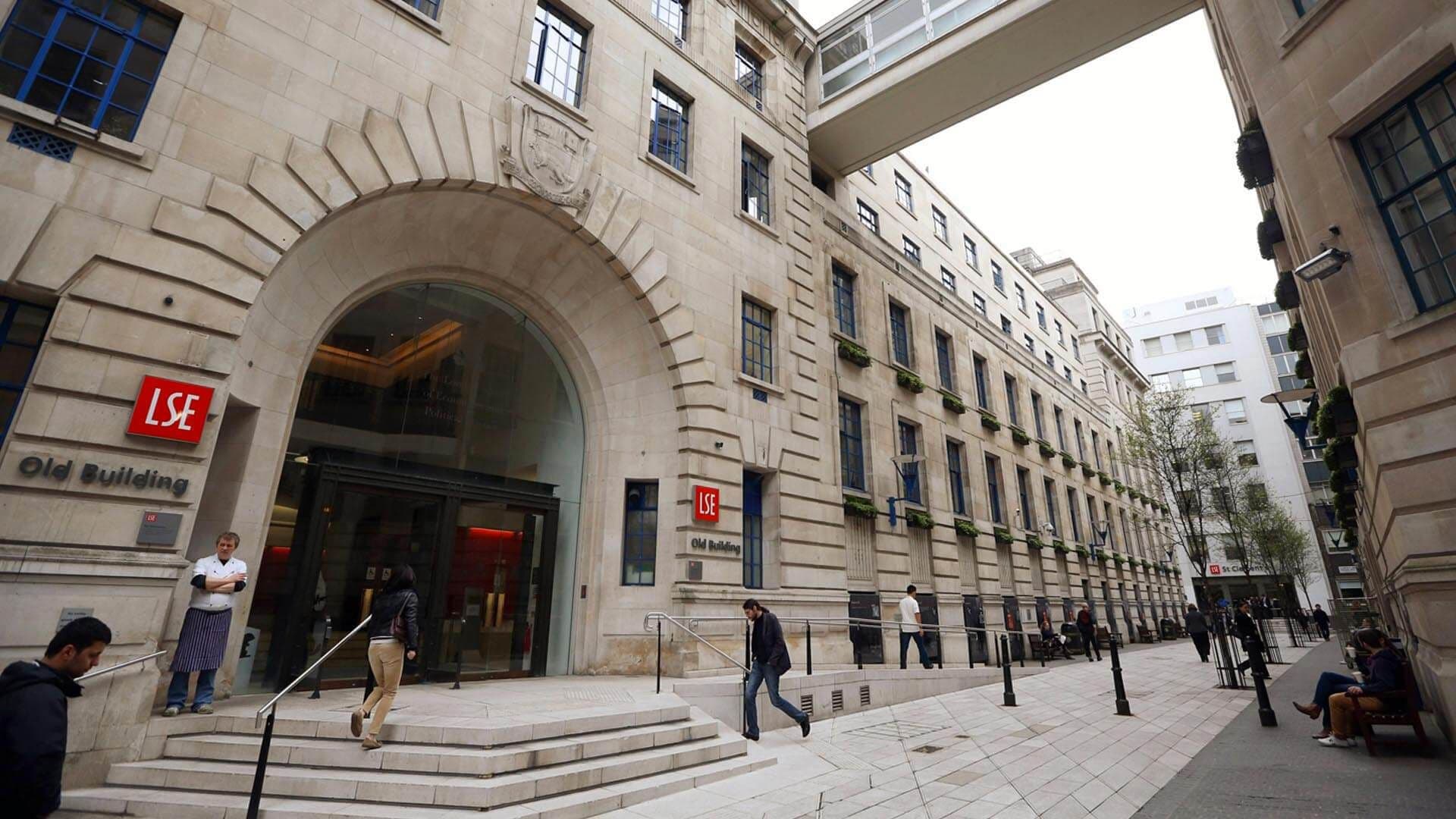
London School of Economics and Political Science (LSE)
London, United Kingdom


A master's in economics trains you to reason about how people, firms and governments make decisions under scarcity, and to test those ideas against real data. Stuudy currently lists 249 economics programmes at 58 universities, of which 121 are taught at master's level. They are spread across three study destinations that between them cover very different funding models and academic traditions: the United Kingdom (168 programmes), Germany (51), and Turkey (30). This page pulls that catalogue together so you can compare degree types, tuition and destinations before you shortlist.
Economics is the study of how resources are allocated and how incentives shape behaviour, from a single household's budget to global trade flows. Almost every taught master's is built on the same three pillars. Microeconomics looks at individual agents: consumer choice, firm pricing, market structure and strategic interaction through game theory. Macroeconomics zooms out to growth, inflation, unemployment, monetary and fiscal policy, and the models central banks and treasuries actually use. Econometrics is the empirical engine, giving you the statistical toolkit to estimate causal effects, forecast, and separate signal from noise in messy data.
Beyond the core, programmes branch into fields such as development, labour, industrial organisation, environmental and behavioural economics. You will typically write a dissertation and, on more quantitative tracks, spend real time in a statistical package such as R, Stata or Python. If the empirical side appeals most, it is worth comparing dedicated econometrics, statistics and mathematics hubs alongside the pure economics options.
The letters after a programme's name signal how technical it is. The MSc (Master of Science) is by far the most common label in our data, covering 101 of the listed programmes; it usually means a mathematically rigorous, model-and-data-heavy course and is the standard route toward a PhD or a quantitative career. The MA (Master of Arts) appears on 11 programmes and tends to lean more toward theory, policy and applied analysis with lighter formal prerequisites. You will also find research-focused variants such as the MRes and MPhil, which are designed as springboards into doctoral study. None of these is inherently "better" — the right one depends on your maths background and where you want to end up.
The listings are led by the United Kingdom, home to some of the discipline's most recognisable departments. That includes the London School of Economics and Political Science, University College London, and the Universities of Oxford, Cambridge, Warwick, Manchester, Edinburgh and Bristol, alongside Imperial College London and Durham. Germany adds a strong, research-intensive and often low-cost alternative through universities such as LMU Munich, Mannheim, Heidelberg and Goethe Frankfurt, while Turkey rounds out the catalogue with institutions including Middle East Technical University. If a particular destination matters to you, the UK, Germany and Turkey country pages break the options down further.
Tuition varies enormously by country, and the numbers in our catalogue reflect that. Across the master's programmes listed here, annual tuition runs from roughly 1,500 at the low end to about 84,300 at the top, with a median near 39,700. Germany's public universities sit at the bottom of that range — many charge only nominal per-semester administrative fees rather than full tuition — which is why the country is such a popular choice for cost-conscious applicants. The upper end is occupied by flagship UK master's degrees at the most selective departments. When you budget, weigh living costs and programme length too: a one-year UK master's and a two-year German one can end up closer in total cost than the headline fee suggests.
An economics master's is valued precisely because it is portable. Graduates move into economic consulting, banking and financial analysis, central banks and finance ministries, competition and regulatory authorities, international organisations, data and pricing roles in industry, and academia. The common thread is the ability to structure a messy problem, quantify it, and communicate a defensible answer. If you are drawn to markets and corporate finance, it is worth reading our finance hub; if the pull is toward government and regulation, the public policy, public administration and political science hubs cover closely related routes.
Start with your maths background and be honest about it: quantitative MSc courses often expect calculus, linear algebra and probability, and some publish an explicit prerequisite list. Next, look at the field specialisms on offer and check they match your interests — a department strong in development economics is not automatically strong in finance or econometrics. Then weigh practicalities: programme length, whether a dissertation or a taught-only exit is available, tuition against the median above, and post-study work rights in your target country. Finally, read the actual module lists rather than the marketing copy; two degrees with the same name can differ sharply in how technical they really are.
Economics sits at the centre of a wider cluster of social-science and quantitative fields, and many applicants apply across several at once. Depending on where your interests lean, explore finance, econometrics, statistics, mathematics, business administration, public policy, political science, public administration and international relations.
Master of Science · Full-time · On Campus
London School of Economics and Political Science (LSE)
London, United Kingdom
Master of Science · Part-time · On Campus
London School of Economics and Political Science (LSE)
London, United Kingdom
Master of Science · Full-time · On Campus

University College London (UCL)
London, United Kingdom
Master of Arts · Full-time · On Campus
University College London (UCL)
London, United Kingdom

.webp&w=3840&q=75)

.webp&w=1920&q=75)

.webp&w=3840&q=75)

.webp&w=3840&q=75)
.webp&w=1920&q=75)
.webp&w=3840&q=75)