Master of Science · Full-time · On Campus
University of Oxford
Oxford, United Kingdom





A master's in mathematics is a graduate degree, usually one to two years long, that deepens your command of mathematical theory and its applications well beyond undergraduate level. It is the natural next step for graduates in mathematics, physics, engineering, economics or computer science who want to specialise, sharpen their research skills, or open doors to quantitative careers and doctoral study. On Stuudy we currently list 334 mathematics programmes at 108 universities, and more than 120 of them lead to a master's qualification, most commonly a Master of Science (MSc). Whether you are drawn to abstract proofs or to modelling real-world problems, a taught or research master's gives you the depth that employers and PhD supervisors look for.
Most postgraduate mathematics splits, broadly, into pure and applied tracks, though many degrees blend the two. Pure mathematics concentrates on structure and proof: algebra, analysis, topology, number theory and geometry. Applied mathematics turns those tools onto concrete questions in physics, biology, finance and engineering, through areas such as differential equations, numerical analysis, optimisation and mathematical modelling. Across our listings you will also find focused master's titles such as Pure Mathematics, Advanced Mathematics, Mathematical Modelling, Mathematical Finance and Business Mathematics, alongside broad Mathematical Sciences degrees that let you postpone the choice. If your interests lean toward data and inference, closely related fields such as statistics and applied mathematics are worth comparing side by side.
A taught master's typically combines a core of advanced modules, a set of electives, and a substantial dissertation or research project. Early modules revisit and extend the foundations, real and complex analysis, linear algebra, measure theory, then branch into your chosen specialism. Applied programmes lean on computation, so you can expect to work in Python, MATLAB or R and to handle numerical methods and simulation. Research-focused degrees, including the integrated MSci and Master of Research routes offered by several UK universities, weight the dissertation more heavily and prepare you directly for a PhD. Whichever path you take, the emphasis is on rigorous reasoning and independent problem-solving rather than rote technique.
The programmes on Stuudy span ten countries, so you can weigh very different academic cultures and costs. The United Kingdom has by far the widest choice, with 147 programmes and departments such as Oxford, Imperial College London, UCL, Warwick, Manchester and Bath. The United States follows with 74 listings, including MIT and Stanford. In continental Europe you can study in Germany (37 programmes), the Netherlands, Sweden, Italy, France, Spain and Switzerland, home to ETH Zurich, as well as Turkey. English-taught master's are common across northern and central Europe, and several countries charge little or no tuition to international students, which makes location a genuine strategic choice rather than an afterthought.
Tuition for a mathematics master's varies enormously with country, institution and your fee status, so it is best checked programme by programme rather than through a single average. Public universities in much of continental Europe, including several German, French and Nordic institutions in our listings, charge modest fees or none at all, though you will still budget for living costs. Fees at leading UK and US universities are considerably higher, and private US institutions higher still. Many departments offer scholarships, assistantships or fee waivers, especially for research-track and PhD-bound students, so factor funding into your comparison. Each programme page on Stuudy shows the tuition figure supplied by the university, and the country hubs above help you compare the overall cost of living in each destination.
Mathematics is one of the most transferable graduate qualifications. The analytical and modelling skills you build open roles in data science, quantitative finance, actuarial work, software engineering, cryptography, operations research and academia. Employers in banking, insurance, technology and consulting actively recruit mathematics graduates for their ability to reason precisely under uncertainty. A master's can be the stepping stone to a PhD and a research career, or a direct route into industry: specialised degrees in finance, actuarial science or econometrics point squarely at particular professions, while a broad mathematics master's keeps several doors open at once.
Start from where you want to end up. If a research career appeals, prioritise departments whose staff publish in your area of interest and look for research-heavy MSc, MSci or Master of Research formats. If you are aiming at industry, weigh applied modules, computational content and links with employers. Then balance the practical factors: entry requirements and the mathematics you are expected to have covered, language of instruction, total cost including living expenses, and the length of the degree. Comparing two or three shortlisted programmes against these criteria is usually more useful than chasing a single ranking.
If you are still narrowing down your field, it is worth exploring subjects that sit close to mathematics and often share modules or career paths. These include statistics, applied mathematics, physics, computer science, economics and econometrics. Comparing the programmes on offer across these hubs will help you find the balance of theory, computation and application that fits you best.
Master of Science · Full-time · On Campus
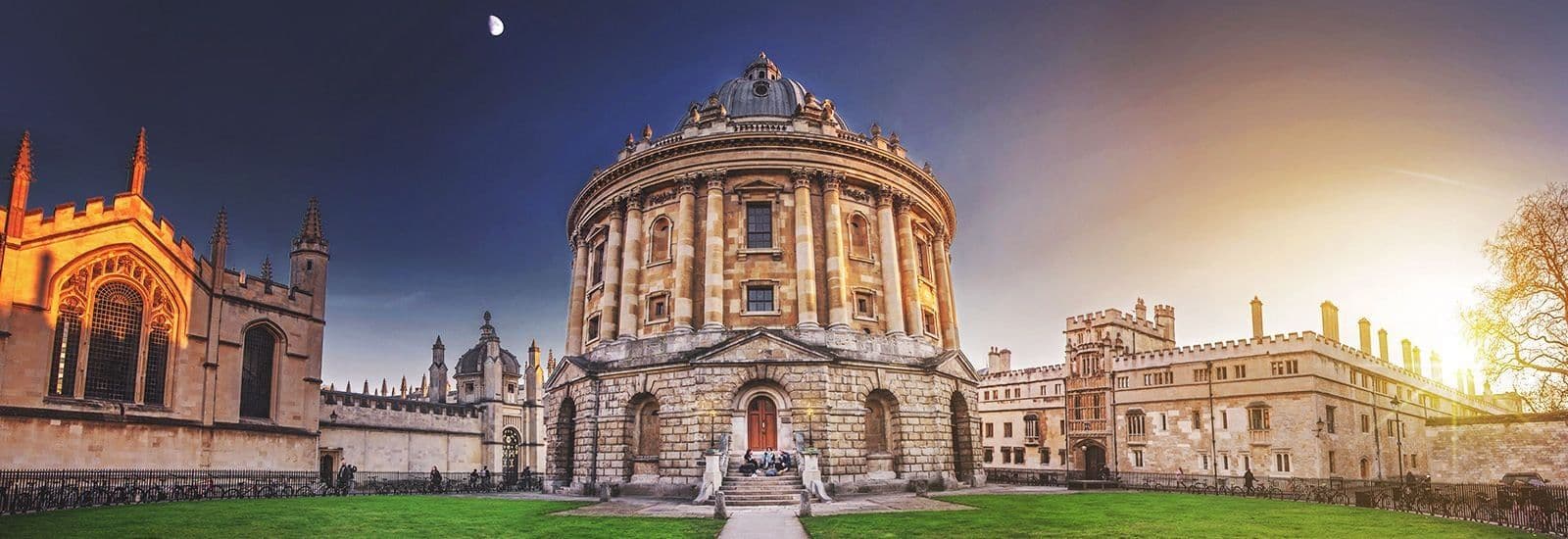
University of Oxford
Oxford, United Kingdom
Bachelor of Science · Full-time · On Campus

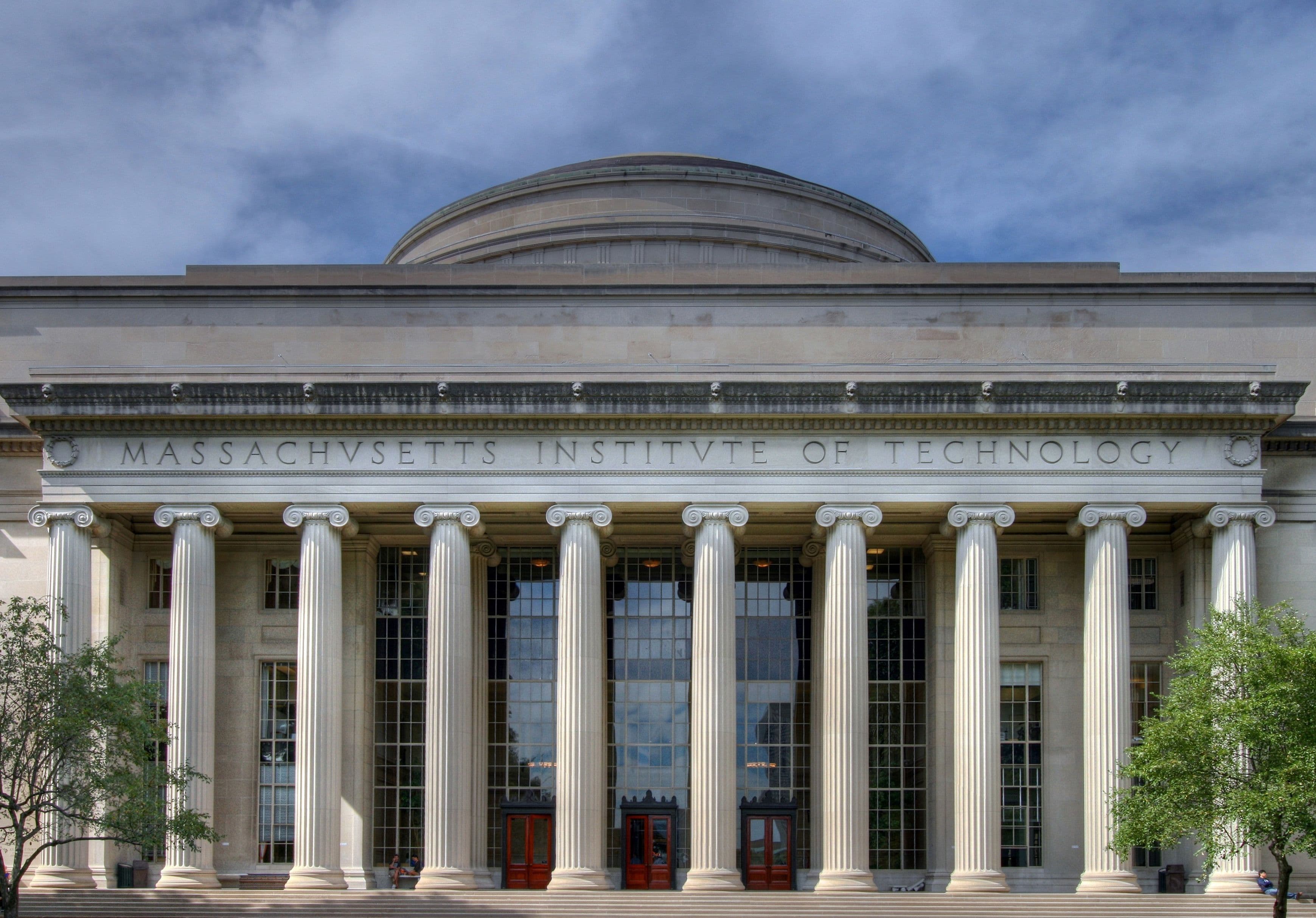
Massachusetts Institute of Technology (MIT)
Cambridge, United States
Master of Science · Full-time · On Campus

Stanford University
Stanford, United States
Master of Science · Full-time · On Campus

ETH Zurich - Swiss Federal Institute of Technology
Switzerland
Studying Mathematics is more than solving equations — it’s mastering the universal language of science, technology, and progress. By choosing the right programme and institution, you’ll gain advanced problem-solving abilities, logical reasoning, and analytical skills that are valued worldwide. Whether you aim to explore pure mathematical theories, model complex real-world systems, or apply quantitative methods in technology, finance, and data science, this field prepares you for a versatile and impactful career. Mathematics opens doors to innovation, research, and global opportunities in every sector. 🔢🌍




.webp&w=3840&q=75)
.webp&w=3840&q=75)

.webp&w=1920&q=75)