Master of Science · Full-time · On Campus

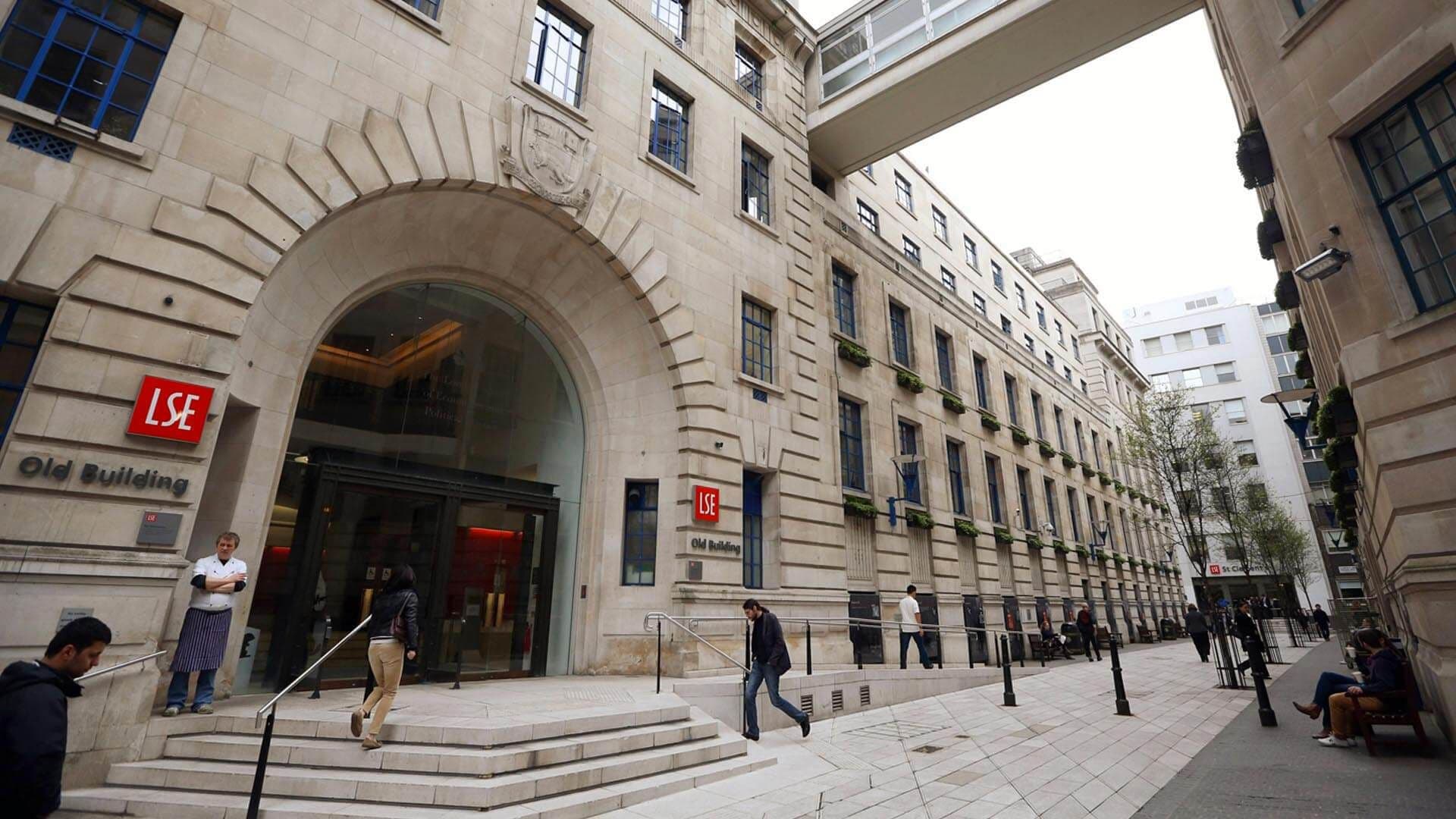
London School of Economics and Political Science (LSE)
London, United Kingdom





A master's in finance is a one- to two-year graduate degree that teaches you to value assets, manage risk and move capital between the people who hold it and the projects that need it. It sits where economics, mathematics and business meet, and it assumes you already grasp the basics of markets and accounting before going deep into pricing, portfolios and corporate decision-making. Stuudy currently lists 255 finance programmes at 81 universities across 11 countries, so the picture below reflects what studying finance abroad actually looks like rather than a generic overview.
The single most common qualification in our catalogue is the Master of Science (MSc) in Finance, which covers 140 of the listed programmes. A smaller group are branded Master of Finance (MFin) degrees, including the well-known programmes at MIT and the University of Cambridge, which tend to be practitioner-focused and are often aimed at people heading straight into banking or asset management. You will also find specialist routes such as the Master of Laws (LLM) in financial regulation, and, at undergraduate level, 44 Bachelor of Science options for students who have not yet studied the subject. If your interest leans toward theory, modelling and research, look for titles built around financial economics or quantitative finance; if you want an applied, career-first path, an MFin or an MSc with a clear industry track is usually the better fit.
Most master's in finance curricula share a common core: corporate finance, asset pricing, financial econometrics, derivatives and fixed income, and financial statement analysis. From there, programmes branch into specialisations, and the titles in our data include quantitative finance, banking and finance, financial mathematics, and energy and commodities finance. Expect a heavy dose of statistics and programming; strong numeracy matters more than a finance-specific background, which is why the field draws graduates from economics, engineering and the sciences alike. Many programmes end with a dissertation, an applied consulting project, or time on trading-room simulations.
The programmes on Stuudy are concentrated in Europe and North America. The United Kingdom is by far the largest destination with 115 listings, followed by the United States with 51 and the Netherlands with 30. Continental Europe adds strong options in Germany, Switzerland, Italy, France, Spain and Sweden. That spread matters: a UK MSc is typically a single intense year, while continental programmes often run two years and may be taught partly or wholly in English. Universities in the catalogue range from the London School of Economics, Imperial College London, the University of Warwick and the University of Oxford to the University of Amsterdam, Universita Cattolica del Sacro Cuore and specialist institutions across the Alps.
Costs vary enormously by country and by whether an institution is public or private, so compare the exact figure listed on each programme page rather than relying on an average. As a rule of thumb, public universities in Germany, France, Sweden and parts of Italy charge little or no tuition beyond administrative fees, while universities in the UK, the US and Switzerland, along with private business schools, sit at the expensive end and can run into tens of thousands per year. Because our listings mix several currencies, we deliberately avoid quoting a single headline price range here: check the tuition figure on the programme you are considering, and budget separately for living costs, which differ sharply between, say, a Dutch university town and central London.
A master's in finance is a vocational degree, and most graduates move into investment banking, asset and wealth management, corporate finance, risk and compliance, private equity, or the fast-growing fintech sector. Quantitative and financial-mathematics tracks feed trading and quant roles, while broader MSc and MFin degrees lead to analyst positions across banking and consulting. Because finance is a global industry, an internationally recognised degree, and the network that comes with studying abroad, can be as valuable as the coursework itself.
Start with the outcome you want and work backwards. Decide between an applied MFin and a research-oriented MSc; check whether a programme is quantitative enough, or not too quantitative, for your background; confirm the language of instruction and the length; and look at where the school sits relative to the financial centre you hope to work in. Entry requirements usually include a numerate first degree, and competitive programmes may ask for the GMAT or GRE. Use the featured programmes and universities below as a starting shortlist, and compare them on tuition, location and specialisation before you apply.
Finance overlaps heavily with neighbouring fields. If you are weighing your options, it is worth comparing a master's in finance with one in economics or econometrics for a more theoretical, model-driven path, or business administration for a general management route. Quantitatively minded students often also look at statistics and mathematics, both of which underpin modern asset pricing. And if your interest is in how markets are governed rather than traded, our hubs on public policy and public administration cover the regulatory side.
Master of Science · Full-time · On Campus
London School of Economics and Political Science (LSE)
London, United Kingdom
Master of Finance · Full-time · On Campus

University of Cambridge
Cambridge, United Kingdom
Master of Science · Full-time · On Campus

Imperial College London
London, United Kingdom
Master of Finance · Full-time · On Campus

Massachusetts Institute of Technology (MIT)
Cambridge, United States
Studying Finance is more than learning numbers — it’s about understanding how money moves, markets function, and businesses grow. By choosing the right program, you’ll gain expertise in financial analysis, investment strategies, risk management, and global markets. With a strong foundation in theory and practical skills, you’ll be prepared to make data-driven decisions that shape economies and organizations.
Whether you dream of working in banking, corporate finance, investment management, or fintech, this field opens doors to a rewarding and impactful career worldwide.


.webp&w=1920&q=75)


.webp&w=3840&q=75)