Master of Public Administration · Full-time · On Campus

University of Michigan
Ann Arbor, United States


A master's in public policy (MPP) trains you to analyse real-world problems — housing, health, climate, migration, education — and to design, cost and evaluate the government or organisational responses to them. It sits at the intersection of economics, political science and data analysis: you learn to ask what a policy is meant to achieve, weigh the evidence and trade-offs, and turn that judgement into decisions that hold up under scrutiny. On Stuudy we currently list 83 public policy programmes at 41 universities across 8 countries, spanning full MPP and MPA degrees, specialist MSc titles and undergraduate routes into the field.
The three most common labels look similar but point in different directions. A Master of Public Policy (MPP) leans toward analysis — economics, statistics and the substance of specific policy areas — and suits people who want to research, model and advise. A Master of Public Administration (MPA) leans toward implementation and management — budgets, organisations, leadership — and often attracts those already working in government or non-profits. A named MSc, such as Social Policy or Data Science and Public Policy, is usually more specialised and research-intensive. Across our listings the MSc route is the most common by volume, with dedicated MPP and MPA degrees offered by schools including LSE, the University of Oxford, Harvard and the University of Michigan.
Most programmes share a recognisable core built around three pillars. Policy analysis teaches you to frame a problem, compare options and structure a recommendation, often through cost-benefit analysis and case studies. Economics for policy covers microeconomics, public finance and how markets, taxes and incentives shape behaviour. Quantitative and empirical methods — statistics, regression, causal inference and increasingly data science — give you the tools to measure whether an intervention actually worked. Around this core you choose electives in areas such as health, education, environment, security or international development, and most degrees end with a capstone, thesis or client-based policy project.
The programmes in our directory concentrate in two English-speaking hubs and a growing set of European options. The United Kingdom has the most listings (42), including public policy schools at Oxford, LSE and UCL, followed by the United States (30) with Harvard, Stanford, Michigan and Duke among them. Continental Europe adds distinct alternatives in Germany, France and the Netherlands, where tuition tends to be far lower. If you want to compare the systems side by side, our United Kingdom hub is a useful starting point for the largest concentration of options.
Cost varies more by country than by prestige. Among the master's-level programmes we list, published tuition runs from a few hundred euros at some public European universities — for example low-fee options in Germany and France — up to roughly €71,000 for the most expensive one-year degrees at Oxford. The median master's tuition is around €39,000, but that figure hides a real split: UK master's programmes cluster near €39,000 while US programmes sit closer to a €60,000 median, and are usually two years long. When you budget, add living costs, and check each programme page for scholarships and funding, since these can change the real price substantially.
Graduates rarely follow a single track. Typical destinations include civil service and government analyst roles, policy and research posts at think tanks, programme and evaluation jobs at NGOs and international organisations, public affairs and regulatory work in the private sector, and consulting. The common thread is being able to combine rigorous analysis with a clear grasp of how decisions actually get made. Because the skills are transferable, an MPP can also be a route into adjacent fields such as economic policy, public health administration or international development work.
Look past the ranking headline and check the things that determine your day-to-day experience. Does the curriculum emphasise the quantitative depth you want, or the management and leadership side? Are there electives and faculty in your specific policy area? How long is the degree — one intensive year or a two-year format with an internship — and what does that mean for cost and outcomes? What links does the school have to employers in the country where you want to work? Use the programme and university pages on each listing to compare curriculum, duration, tuition and location before you shortlist.
Public policy overlaps heavily with several neighbouring fields, and it is worth comparing them before you commit. If you are drawn to running institutions and delivering programmes, look at Public Administration. For the theory of power, elections and government, see Political Science; for cross-border and diplomatic questions, International Relations. If the analytical, numbers-driven side appeals most, Economics is a natural companion, and those focused on health systems and policy should explore Public Health.
Master of Public Administration · Full-time · On Campus
University of Michigan
Ann Arbor, United States
Master of Public Policy · Full-time · On Campus

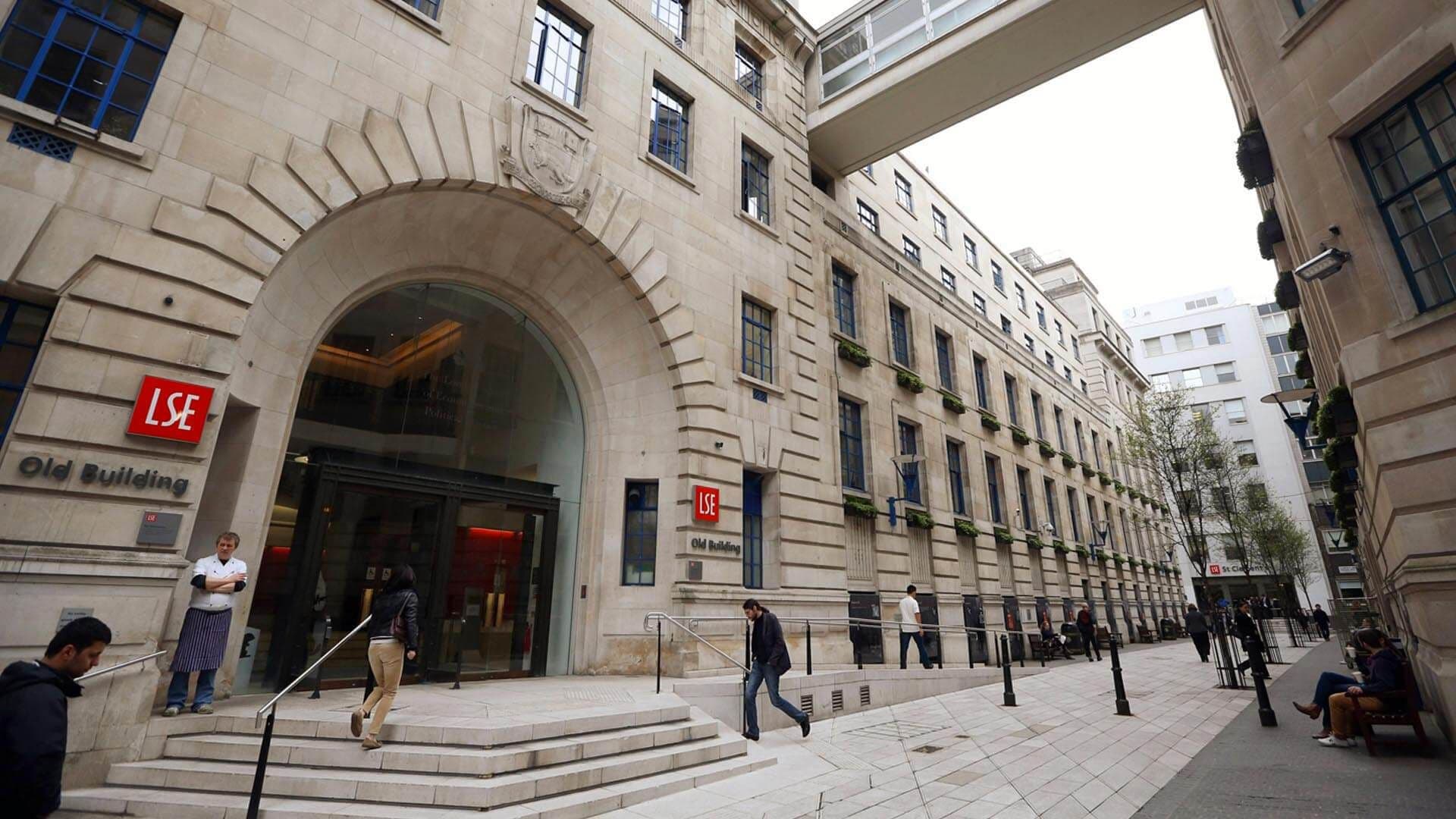
London School of Economics and Political Science (LSE)
London, United Kingdom
Master of Public Policy · Full-time · On Campus

University of Oxford
Oxford, United Kingdom
Master of Public Administration · Full-time · On Campus

University College London (UCL)
London, United Kingdom



.webp&w=3840&q=75)

.webp&w=1920&q=75)