Bachelor of Science · Full-time · On Campus

Istanbul Technical University
Turkey
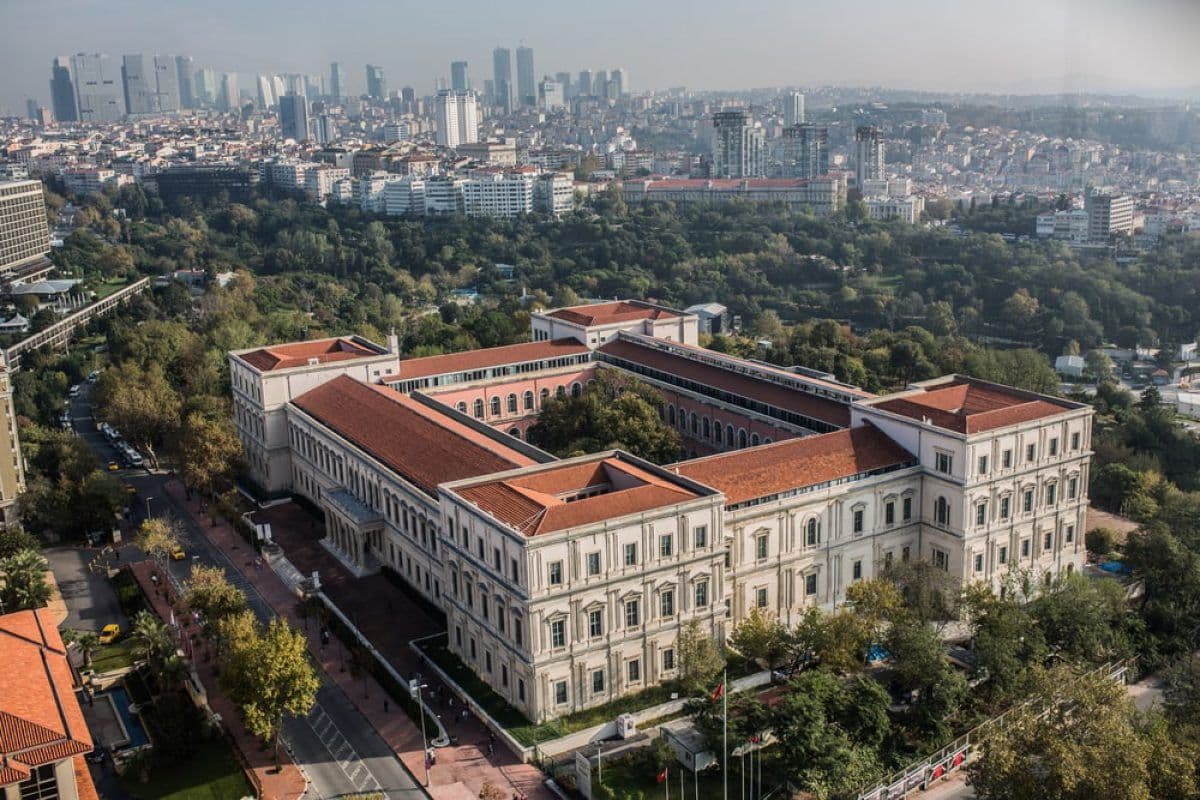
The Physics Engineering programme at Istanbul Technical University is a four-year bachelor’s degree taught partly or fully in English. In this programme, you study the structure and laws of nature — how matter works, how forces and energy interact, and how physical systems behave at many scales. You learn core physics topics: mechanics, electromagnetism, thermodynamics, waves, quantum and classical physics alongside strong mathematics and computational skills. Later years give the chance to focus on advanced topics and applied physics.
The programme also combines theory with experiments and engineering thinking. Students use laboratories, do experiments, apply simulations, and learn how to model real-world systems — from small particles to large physical systems. With this education, graduates gain deep understanding of physics and problem-solving skills that suit both scientific research and technical engineering jobs. Studying at İTÜ means access to experienced instructors and a department that supports both pure physics and applied physics or engineering-oriented physics paths.
Semester 1 – Basic Mathematics & Physics Foundations
Semester 2 – Core Physics & Mathematics
Semester 3 – Core Physics & Engineering Tools I
Semester 4 – Advanced Physics Concepts I
Semester 5 – Applied & Theoretical Physics I
Semester 6 – Applied & Theoretical Physics II
Semester 7 – Specialization & Research Project
Semester 8 – Final Project & Graduation Preparation
Graduates of Physics Engineering can work as research scientists, technical engineers in physics-based industries, data scientists, simulation & modelling experts, R&D engineers, or specialists in sectors like energy, materials, electronics, optics, aerospace, or environmental physics. They may join universities, research centres, technology firms, national labs, space and defense industries — or choose to continue with graduate studies (MSc / PhD) in physics, engineering, applied physics or interdisciplinary fields. This wide scope makes Physics Engineering graduates flexible and adaptable to many career paths.
This programme gives you deep knowledge about how the universe works — from fundamental laws of nature to advanced physical systems — while teaching you practical skills in computation and engineering. You not only learn theory but also do experiments, simulations and real scientific work that build strong analytical thinking and problem-solving skills. This solid ground helps you work in research, technology or engineering sectors, or continue to graduate studies with confidence.
Also, physics is the basis of many advanced technologies — electronics, materials, energy, aerospace, quantum technologies and more. With a degree in Physics Engineering you get a broad, flexible education that allows you to work in various high-tech fields or switch focus later. The mix of science, engineering and mathematics gives you freedom to choose many career paths or research areas.
Istanbul Technical University – Faculty of Science (Department of Physics Engineering)
Maslak / Ayazağa Campus,
Istanbul, Turkey
Tel: +90 212 285 32 09
Email: physics@itu.edu.tr
Physics Engineering Department – Programme Office
Istanbul Technical University
Tel: +90 212 285 32 09
Email: info@fizik.itu.edu.tr
Bachelor of Science · Full-time · On Campus
Istanbul Technical University
Turkey
Bachelor of Science · Full-time · On Campus
Istanbul Technical University
Turkey
Bachelor of Science · Full-time · On Campus
Istanbul Technical University
Turkey
Bachelor of Science · Full-time · On Campus
Istanbul Technical University
Turkey
