Bachelor of Science · Full-time · On Campus

University of Rome Tor Vergata
Rome, Italy
To study in Italy as a non-EU student, you apply to the university first, then pre-enrol on the government's Universitaly portal, then apply for a type D study visa. For the visa you must show at least €10,179.85 a year (the figure for 2026/27 and 2027/28). Tuition at public universities is set by each university. For non-EU students whose family lives abroad, it is usually a fixed fee of a few thousand euros or less: €2,790 to €2,990 a year at the University of Padua, a maximum of €3,943.04 at Politecnico di Milano, and a flat €1,000 to €1,200 plus €157.04 at the University of Bologna for citizens of non-OECD countries.
This guide follows the order in which you will meet each step. Every figure comes from the Italian Ministry of Foreign Affairs, an Italian consulate in India, a university fee page or the Emilia-Romagna regional grant agency, all checked in November 2026 for the 2026/27 academic year.

The Consulate General of Italy in Mumbai lists the 2026/27 sequence for Indian applicants, and the Foreign Ministry's FAQ page sets out the pre-enrolment and residence permit rules. Students from other countries follow the same steps through their local Italian embassy.
There is no national English test rule. Each university decides. Politecnico di Milano asks master's applicants for IELTS (Academic or General Training) of at least 6, or TOEFL iBT of at least 78, and does not accept expired certificates. If your bachelor's degree was taught in English, it accepts a certified letter from your university confirming the medium of instruction instead of a test. Italian-taught programmes also require Italian at B2 level.

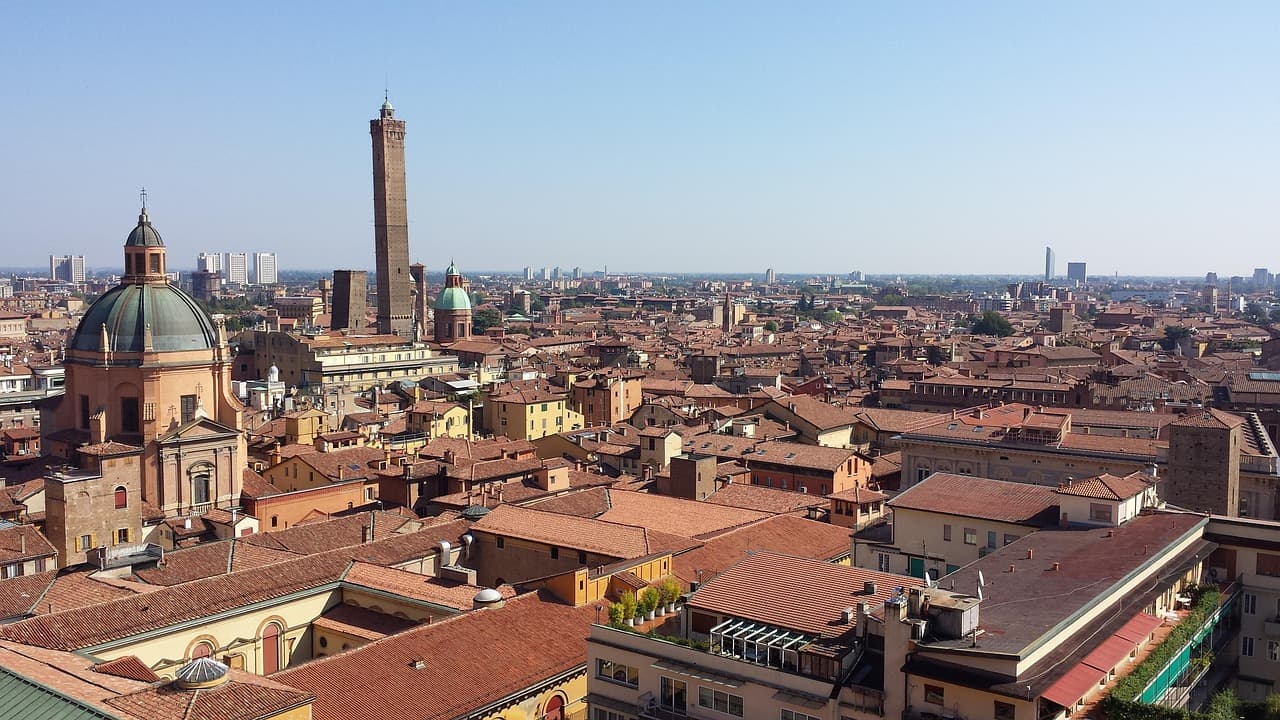
Photo: NuclearNiranjan, CC BY-SA 4.0, via Wikimedia Commons
Italian public universities link fees to family income. Italian families prove income with an ISEE certificate. Students whose family income and assets are outside Italy usually pay a fixed fee instead, and how that fee is set differs by university. Here are three examples for 2026/27, taken from the fee pages of Padua, Politecnico di Milano and Bologna:
These figures are fees only, and they apply to public universities. Private universities such as Bocconi set their own tuition under separate rules. For a comparison of Italy's total first-year cost with Germany, France, Poland and Austria, see our guide to the cheapest countries to study abroad for Indian students.
The Ministry of Foreign Affairs sets the minimum at €10,179.85 a year for university study in 2026/27 and 2027/28, which works out to about €848 a month. For a course of several years you only prove the first year. Each consulate publishes its own checklist of acceptable proof. The Foreign Ministry's FAQ, for example, says students who hold an Italian government scholarship of less than €10,179.85 must show their own funds to cover the gap.
Not as a single national award. The main aid for degree students is the regional "right to study" grant, paid by an agency in each region and based on family income. Students whose family income is abroad can apply too. They submit income and asset documents issued by the authorities in their home country, translated into Italian and legalised (or apostilled where that applies).
ER.GO, the agency for Emilia-Romagna (where Bologna is), publishes these limits for 2026/27:
Combined with Bologna's full exemption from the income-based fee for an ISEE of up to €27,000, a low-income student can end up paying only the €157.04 fixed fee and receiving a grant. That is the closest Italy comes to a full scholarship. Other regions run their own calls with their own limits, so check the agency for your university's region.

Yes. The Foreign Ministry states that a student residence permit allows part-time work of up to 20 hours a week, with a limit of 1,040 hours a year. You can travel in the Schengen area for up to 90 days in any 180-day period on the same permit.
Graduates of an Italian bachelor's, master's, PhD or university master's programme can request a permit to look for work or start a business when their study permit expires. The Italian government's integration portal says this permit lasts between 9 and 12 months, under Legislative Decree 71/2018. Since Decree-Law 23/2023, a study permit can be converted into a work permit at any time of the year with no quota limit. These are not permanent residence: they are the bridge from studies to a work permit.
In the EduRank world ranking, the highest-placed Italian universities are the University of Bologna (#104), Sapienza University of Rome (#119), the University of Milan (#146), the University of Padua (#153), the University of Turin (#221) and Politecnico di Milano (#250). The full list is on the best universities in Italy ranking, and the Italy country page lists universities by city. Two programmes at the University of Rome Tor Vergata in stuudy's catalogue:
Bachelor of Science · Full-time · On Campus
University of Rome Tor Vergata
Rome, Italy
Master of Arts · Full-time · On Campus
University of Rome Tor Vergata
Rome, Italy
Checklist for 2026/27: (1) confirm your degree meets the university's country rules; (2) apply on the university site; (3) pre-enrol on Universitaly; (4) request a Declaration of Value or CIMEA statement if asked; (5) prove €10,179.85 for the first year; (6) book the visa appointment early, as a D visa can take up to 90 days; (7) apply for the residence permit within 8 days of arrival; (8) apply to your region's grant agency if your family income qualifies.
Once you hold a pre-enrolment confirmation, your next step is the visa appointment. Our visa applications guide explains how to prepare it.