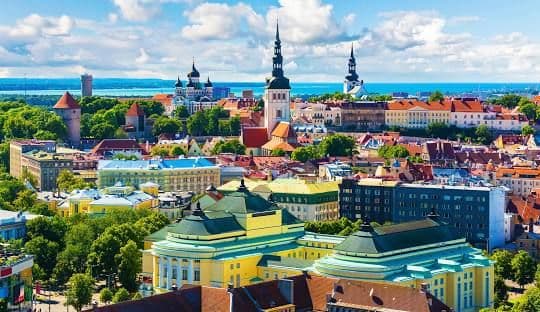
The ultimate guide to studying in Estonia in 2025


🇪🇪 Overview: Study in Estonia
Estonia is an emerging destination for international students, offering high-quality education, advanced digital infrastructure, and a safe, student-friendly environment. Known for its innovation, e-governance, and forward-thinking academic approach, Estonia provides a unique blend of tradition and modernity.
Home to leading institutions such as the University of Tartu, Tallinn University of Technology (TalTech), and Tallinn University, students can choose from a wide range of English-taught programs in fields like IT, engineering, business, life sciences, and the arts.
🎯 Whether you aim to build a career in technology, gain hands-on experience in research, or immerse yourself in a digitally driven society, Estonia offers the perfect setting for academic and personal growth.
🌟 Why Study in Estonia?
🌍 Globally Respected Degrees
Estonian degrees are internationally recognised and valued, particularly in technology, business, and scientific research, supported by strong connections with industry and global research networks.
🎓 Innovative & Career-Focused Programs
Benefit from modern, flexible programs that integrate digital tools, project-based learning, and internships — preparing graduates for the demands of the global job market.
💼 Work While You Study
International students can work full-time without a separate work permit, gaining professional experience and building industry connections during their studies.
🏛️ Top Universities
Study at institutions like the University of Tartu, TalTech, and Tallinn University — all known for academic excellence, research innovation, and an inclusive campus culture.
🏞️ Safe, Digital & Student-Friendly
Live in one of the world’s most digitally advanced and safest countries, where e-services make daily life easy and student satisfaction rates are among the highest in Europe.
💸 Tuition & Costs: Study in Estonia
Studying in Estonia offers an excellent balance of high-quality education and affordable costs, making it one of Europe’s most budget-friendly study destinations. Tuition fees vary depending on the program, level of study, and institution, while living expenses are generally lower than in many Western European countries. Careful budgeting will help ensure a smooth and comfortable study experience.
🎓 Tuition Fees
Estonian universities offer competitive tuition rates for international students:
- Undergraduate programs: €2,000–6,000 per year, depending on the field and institution.
- Graduate programs: €3,000–8,000 per year on average, with some specialised programs (e.g., medicine, engineering) costing more.
- Certain programs in high-demand areas or with strong research components may have slightly higher fees.
💡 Many Estonian universities offer merit-based scholarships and tuition waivers for international students. Details can be found in the Scholarships & Funding section.
🏠 Living Expenses
Living in Estonia is relatively affordable compared to many EU countries. Monthly costs depend on the city (Tallinn and Tartu are the most popular student cities) and your lifestyle. Here’s a general estimate:
- Rent & utilities: €300–600 (shared accommodation or dormitory; private apartments may cost more)
- Food & groceries: €200–350
- Public transportation: €8–30 (discounted student passes)
- Health insurance: €50–100 per month (mandatory for non-EU students)
- Personal expenses: €100–200
👉 On average, international students spend €500–900 per month on living expenses. Tartu is generally more affordable than Tallinn.
🧮 Budget Planning Tips
- Apply early for university dormitories, which offer the most affordable housing options.
- Take advantage of student discounts for public transport, cultural events, and sports facilities.
- Cooking at home is significantly cheaper than eating out.
- Plan for initial expenses such as residence permit fees, travel costs, study materials, and winter clothing.
🛂 Visa & Work Opportunities for International Students in Estonia
To study in Estonia, most non-EU/EEA students need to apply for a long-stay (D) visa and, for programs longer than one year, a Temporary Residence Permit (TRP) for study. These permits allow full-time study and also grant the right to work under specific conditions during your studies and after graduation.
💡 With the right preparation, you can gain work experience in Estonia and even extend your stay to build a career in the country.
📌 Estonian Study Visa & Residence Permit
🎓 Long-Stay (D) Visa – Full-Time Academic Programs
- Required for programs lasting longer than 90 days.
- Apply at the nearest Estonian embassy or consulate before arrival.
- Issued to students admitted to a recognised Estonian university.
- Requires proof of sufficient funds, health insurance, and accommodation arrangements.
🛂 Temporary Residence Permit (TRP) for Study
- Required for studies lasting more than 12 months.
- Apply in Estonia at the Police and Border Guard Board after arrival.
- Allows legal residence for the duration of your program and includes the right to work.
EU/EEA/Swiss Citizens
- Do not need a visa or TRP, but must register their residence and obtain an Estonian ID card within the legal timeframe after arrival.
💼 Working During Studies
✅ Work Rights with a TRP
- International students with a valid TRP can work without a separate work permit, as long as employment does not interfere with their studies.
- Part-time jobs, internships, and project-based work are common among students.
🔄 Internships & Practical Training
- Many degree programs include internships or practical placements as part of the curriculum.
- These placements are typically arranged through the university and may be paid or unpaid.
🎯 After Graduation: Stay & Work in Estonia
📄 Post-Study Stay
- Graduates can stay in Estonia for up to 270 days after their TRP expires to look for a job or start a business.
- During this period, you can work without restrictions.
👨🔬 Residence Permit for Employment
- Once you secure a job, you can apply for a Temporary Residence Permit for Employment, which can be valid for up to 5 years and is renewable.
🧠 Visa Compliance & Tips
- Remain enrolled full-time and maintain satisfactory academic progress.
- Keep your TRP, visa, and passport valid at all times.
- Register your address promptly after moving.
- Maintain valid health insurance for the duration of your stay.
- Apply for the post-graduation stay extension before your TRP expires to avoid gaps in legal residency.
🏛️ Top Universities in Estonia
Estonia is home to innovative and internationally recognised universities, known for their strong academic standards, research excellence, and advanced digital learning environments. Whether you’re interested in technology, life sciences, arts, or business, Estonian universities offer diverse programs — many taught entirely in English — that attract students from all over the world.
🎓 Several Estonian universities are ranked among the Top 100–500 globally in various subject areas by QS and Times Higher Education (THE), with growing visibility in technology, digital governance, and entrepreneurship.
🌟 Leading Estonian Universities for International Students
1. University of Tartu
- Estonia’s oldest and most prestigious university, founded in 1632.
- Strong in medicine, IT, law, and social sciences.
- Home to world-class research projects such as the ESTCube-1 satellite.
- Located in the student city of Tartu.
2. Tallinn University of Technology (TalTech)
- Known for engineering, IT, cyber security, and business.
- Strong ties to Estonia’s tech industry and start-up ecosystem.
- Modern campus in the capital city, Tallinn.
3. Tallinn University
- Specialises in humanities, education, social sciences, and digital media.
- Offers innovative interdisciplinary programs.
- Located in Tallinn, with a diverse and multicultural student community.
4. Estonian University of Life Sciences (EMU)
- Focused on agricultural, environmental, and veterinary sciences.
- Known for sustainability research and green innovation.
- Based in Tartu, with close industry connections.
5. Estonian Academy of Arts (EKA)
- Leading institution for art, design, architecture, and cultural heritage.
- Offers contemporary and applied arts programs in an international environment.
- Located in Tallinn.
🧭 Other Highly Regarded Institutions
- Estonian Academy of Music and Theatre (EAMT) – Music performance, composition, and performing arts.
- Eesti Ettevõtluskõrgkool Mainor (Mainor Business School) – Business management and entrepreneurship.
- Tartu Health Care College – Nursing, midwifery, radiography, and health technology programs.
💡 Many Estonian universities offer tuition waivers and merit-based scholarships for international students, often without a separate application.
🔍 How to Explore Estonian University Rankings
- QS World University Rankings by Subject
- Times Higher Education (THE) Rankings
- Study in Estonia – Official University Profiles
🗣️ English Requirements for Studying in Estonia
If you’re applying to study in Estonia in an English-taught program, you’ll generally need to provide proof of English language proficiency. Most Estonian universities accept IELTS, TOEFL, PTE Academic, and Cambridge English qualifications, and some also recognise the Duolingo English Test.
🎯 Exact score requirements vary depending on the university, faculty, and degree level, so always confirm details on the official website of your chosen institution.
✅ Most Commonly Accepted English Tests
1. IELTS Academic
- Accepted by all Estonian universities offering English-taught programs.
- Typical minimum overall score: 5.5–6.5, with no band below 5.5 in many cases.
- Both paper-based and computer-delivered formats are accepted.
- Results valid for 2 years.
2. TOEFL iBT
- Recognised internationally and widely accepted in Estonia.
- Minimum score: 72–100 iBT, depending on program requirements.
- TOEFL Home Edition is accepted by some institutions.
3. PTE Academic
- Accepted by several universities.
- Minimum score: 51–62, depending on the degree level and subject.
- Computer-based with fast result turnaround.
4. Cambridge English Qualifications
- Certificates such as C1 Advanced (CAE) or C2 Proficiency (CPE) are accepted by many institutions.
- Minimum required level is usually B2 on the CEFR scale.
5. Duolingo English Test (DET)
- Accepted by some Estonian universities, especially for certain master’s programs.
- Fully online; results within 48 hours.
- Minimum score range: 95–105.
🔄 Alternatives & Conditional Admissions
Many Estonian universities offer exemptions or alternative ways to demonstrate English proficiency:
- Previous education completed in an English-speaking country.
- International curricula such as IB Diploma or British A-Levels.
- Completion of a recognised preparatory or pathway program in Estonia.
- Some institutions may conduct their own English proficiency test.
📍 Example:
- University of Tartu generally requires IELTS 5.5 (with no band below 5.5) or TOEFL iBT 72 for bachelor’s programs, and higher scores for master’s programs.
- Tallinn University of Technology (TalTech) typically requires IELTS 6.0 or TOEFL iBT 80.
🧠 Tips for Applicants
- Take your English test at least 3–6 months before application deadlines.
- Check that your test score will still be valid (most are valid for 2 years).
- Send your official score report directly from the test provider to the university.
- If unsure about eligibility, contact the international admissions office of your target institution.
📝 Application Process: How to Apply to Estonian Universities
Applying to an Estonian university as an international student involves several key steps — from selecting the right program to preparing your visa documents. Most Estonian universities accept applications through the DreamApply online platform, though some may also allow direct applications.
🎯 The main intake for English-taught programs in Estonia is Autumn (September), with applications typically opening in January and closing between March and April. A few institutions also offer Spring (February) intake for select programs. Early preparation increases your chances of admission and ensures timely visa processing.
✅ Step-by-Step Guide to Applying
1. 🎓 Choose Your Program & Institution
- Explore programs on StudyinEstonia.ee or university websites.
- Consider location (Tallinn or Tartu are most popular), tuition fees, scholarship opportunities, and field of study.
- Check the language of instruction — many programs are offered entirely in English.
2. 📋 Check Admission Requirements
Each university and program has its own criteria. Common requirements include:
- Academic transcripts from previous studies (high school for bachelor’s, bachelor’s degree for master’s).
- Proof of English proficiency (IELTS, TOEFL, PTE, etc.).
- Motivation letter or Statement of Purpose.
- CV or résumé (especially for master’s programs).
- Letters of recommendation (varies by program).
- Portfolio (for art, design, architecture, or creative fields).
- Application fee payment confirmation.
Competitive programs, such as IT, medicine, and engineering, may have additional tests, interviews, or higher GPA requirements.
3. 🛠️ Submit Your Application via DreamApply
- Create an account on DreamApply and complete your profile.
- Upload required documents in the specified formats.
- Pay the non-refundable application fee (usually €50–100).
- Monitor your application status on the platform.
4. 📤 Await Evaluation and Admission Results
- Applications are reviewed after the deadline; some programs may have rolling evaluations.
- Shortlisted applicants may be invited for an online interview or additional testing.
- Once accepted, you will receive an official offer letter needed for visa/TRP applications.
📆 Typical Application Timeline for Autumn Intake
- January–February: Applications open on DreamApply.
- March–April: Main deadlines for most programs.
- May–June: Admission results released; begin visa and accommodation arrangements.
- September: Academic year begins.
❗ Deadlines vary by university and program, so always check the specific dates on the official website.
📌 Tips for a Successful Application
- Start your application at least 6–8 months before your intended start date.
- Tailor your motivation letter to the specific program and university.
- Prepare and scan official transcripts early; arrange translations if documents are not in English.
- Ensure your passport is valid for the full duration of your studies.
- Apply for housing early, especially in Tartu and Tallinn where student accommodation fills quickly.
🎓 Scholarships & Funding for International Students in Estonia
Estonia offers various scholarships and funding opportunities for international students at both undergraduate and graduate levels. While fully funded awards are competitive, many universities provide tuition waivers, merit-based scholarships, and government-supported programs to make studying in Estonia more affordable.
💡 Several Estonian institutions automatically consider international applicants for certain entrance scholarships — no separate application is required in some cases.
🏅 Merit-Based Scholarships
These are awarded to students with outstanding academic performance, research potential, or exceptional extracurricular achievements. For example:
- University of Tartu Tuition-Waiver Scholarships – Awarded to top-ranking applicants in selected English-taught programs; covers full tuition.
- TalTech Performance Scholarships – Available for students who achieve excellent academic results during their studies, offering monthly stipends or partial tuition coverage.
- Estonian Academy of Arts Scholarships – For students showing exceptional talent in arts, design, or architecture programs.
💡 Need-Based Financial Aid
While less common, some institutions provide limited financial support to students who can demonstrate economic need.
- Certain programs may offer partial tuition reductions or living cost stipends for students from low-income backgrounds.
- The Estonian National Scholarship for International Students may include need-based considerations for short-term mobility or research stays.
🌍 Government & Fully Funded Scholarship Programs
The Estonian government supports several funding schemes for international students:
- Estonian Government Scholarships – Available for master’s and doctoral students in English-taught programs; may cover tuition and provide a monthly allowance.
- Dora Plus Scholarship – Supports mobility and study visits, providing a monthly stipend for up to 10 months.
- Kristjan Jaak Scholarships – For talented students to participate in degree or exchange studies abroad and in Estonia.
- Erasmus+ Mobility Grants – Funded by the EU, enabling study or traineeship periods in partner institutions.
🏫 University-Specific Opportunities
Each Estonian university has its own scholarship portfolio for international students. Examples include:
- University of Tartu International Master’s Scholarships – For high-achieving master’s students in specific programs.
- Tallinn University Merit Scholarships – Awarded to students who demonstrate exceptional academic results.
- Estonian University of Life Sciences Research Grants – For graduate students engaged in sustainability, agriculture, or environmental projects.
✅ How to Maximise Your Chances
- Apply as early as possible — many scholarships have deadlines before the general admission period ends.
- Submit a strong motivation letter that clearly outlines your academic achievements, career goals, and reasons for studying in Estonia.
- Maintain high academic performance throughout your studies to remain eligible for renewal-based awards.
- Explore official resources like StudyinEstonia.ee and university scholarship pages to find the most up-to-date opportunities.
🧑🎓 Student Life in Estonia
Studying in Estonia is more than just academics — it’s about experiencing life in one of Europe’s most digitally advanced, safe, and student-friendly countries. With its vibrant student cities, innovative campuses, and inclusive communities, Estonia offers an enriching experience both inside and outside the classroom.
🌍 Estonia welcomes thousands of international students each year, with Tartu and Tallinn being the top destinations for global learners.
🏛️ Campus Life & Culture
Estonian universities provide modern learning environments and a strong sense of community. Most institutions offer:
- Student-run clubs, societies, and sports teams.
- Volunteer opportunities, career services, and start-up incubators.
- Access to well-equipped libraries, digital learning platforms, and research labs.
- Campus events such as Student Days in Tartu, job fairs, and cultural festivals.
💡 Tip: Join your university’s international student network (such as ESN Estonia) or cultural clubs to meet new friends and adapt more easily.
🏠 Housing Options for Students
International students in Estonia generally choose between:
On-Campus Dormitories:
- Affordable, social, and located near academic buildings.
- Shared rooms are common; monthly rent usually ranges from €100–200.
- Spaces can be limited, so early application is recommended.
Off-Campus Housing:
- Many students rent shared apartments or private flats.
- Monthly rent ranges from €250–500, depending on the city and location.
- Popular housing search platforms include KV.ee, City24.ee, and university housing offices.
🏥 Health Insurance & Medical Support
Health insurance is mandatory for all international students in Estonia.
- EU/EEA students can use their European Health Insurance Card (EHIC) for public healthcare.
- Non-EU students must purchase private health insurance covering their entire stay (often required for visa/TRP applications).
- Coverage includes doctor visits, emergency care, and prescribed medication.
- Many universities guide registering with local healthcare providers.
🌐 Diversity & Inclusion
Estonia’s student community is increasingly international and welcoming. You’ll find:
- Orientation programs and visa guidance for newcomers.
- Language exchange clubs and free Estonian language courses.
- Support services for cultural adaptation and academic success.
- Events celebrating different cultures, such as International Student Festivals.
💡 Estonia’s small size and close-knit student communities make it easy to integrate and feel at home.
📱 Useful Apps for Students in Estonia
- Bolt – Ride-hailing and food delivery.
- Tõlgi / Google Translate – Language assistance.
- Tartu Smart Bike / Bolt Scooters – Bike and e-scooter rentals.
- SEB / Swedbank – Mobile banking.
- E-Selver / Wolt – Grocery and food delivery.
💼 Internships & Jobs for International Students in Estonia
Gaining work experience while studying in Estonia is not only possible — it’s encouraged. International students with a valid Temporary Residence Permit (TRP) for study can work without a separate work permit, provided the job does not interfere with their studies. Many Estonian universities have strong links with local companies and offer internships or practical training as part of the curriculum.
💡 Combining your studies with work experience can help cover living costs, build your professional network, and increase your chances of securing a long-term job in Estonia after graduation.
🧑💼 Working During Studies
International students in Estonia are allowed to:
- Work without hourly limits during the academic year, as long as studies remain the main purpose of stay.
- Take on part-time or full-time jobs during holidays or free periods.
- Work on campus in research projects, administrative roles, or as teaching assistants.
Common part-time jobs for students include:
- IT and software development roles.
- Hospitality and retail positions.
- Language tutoring or translation work.
- Freelance digital services (design, writing, programming).
No additional work permit is required if you hold a valid TRP for studies.
🔄 Internships & Practical Training
Many Estonian degree programs integrate internships or project-based work into the curriculum. These placements are especially common in:
- Engineering and technology.
- Business and finance.
- Life sciences and environmental studies.
- Media, design, and arts.
💡 Some internships are credit-bearing and organised through the university, while others can be found independently through job portals or networking.
🔍 Job Search Resources
Finding jobs or internships in Estonia is easier with the right platforms and contacts. Popular resources include:
- WorkinEstonia.com – Government-supported job portal for international talent.
- CV.ee and CVKeskus ee.ee – Estonia’s largest job search websites.
- University career centres and industry-specific job fairs.
- LinkedIn and company career pages.
- Student networks like ESN Estonia for informal job leads.
🛠️ Post-Graduation Work Options
After graduation, international students can:
- Stay in Estonia for up to 270 days to look for work or start a business after their TRP expires.
- Apply for a Temporary Residence Permit for Employment once they have a job offer. This permit can be valid for up to 5 years and is renewable.
- Transition to long-term residency if they meet the required stay and employment conditions.
✅ Tips for Success
- Start building your CV early and get it reviewed by your university career centre.
- Attend networking events, hackathons, and entrepreneurship meetups.
- Use LinkedIn to connect with Estonian employers in your field.
- Learn basic Estonian — while many jobs are in English, language skills improve employment prospects.
- Keep your TRP valid and update your address and employment details with the authorities.
🎓 After Graduation: Stay and Work in Estonia
Graduating from an Estonian university opens the door to excellent opportunities — not just for employment, but also for building a long-term future in the country. With options like the 270-day post-study stay period and the Temporary Residence Permit (TRP) for employment, international students can smoothly transition from study to career and even toward permanent residency.
💡 Many students who start in Estonia on a student residence permit eventually secure employment and extend their stay, with some moving on to long-term residency.
🧑💼 270-Day Post-Graduation Stay
Estonia allows non-EU/EEA graduates to remain in the country for up to 270 days after their TRP for studies expires to look for work or start a business.
To qualify, you must:
- Graduated from a recognised Estonian university.
- Hold a valid TRP for studies at the time of graduation.
- Apply for the 270-day stay extension before your TRP expires.
During this period, you can work without restrictions while seeking long-term employment.
🌍 Work & Residence Pathways After Graduation
After securing a job, graduates can apply for:
- Temporary Residence Permit for Employment – Valid for up to 5 years, renewable, and tied to your employment contract.
- EU Blue Card – For highly qualified professionals, allowing easier mobility within the EU.
- Temporary Residence Permit for Entrepreneurship – For graduates wishing to start their own business in Estonia.
Long-term residency becomes possible after 5 years of continuous legal stay, provided you meet integration and language requirements.
🏢 Employment Opportunities
Estonia’s job market is strong in areas such as:
- Information technology and software development.
- Engineering and manufacturing.
- Finance, logistics, and e-commerce.
- Life sciences, environmental studies, and green technology.
- Creative industries, media, and design.
University career centres, WorkinEstonia.com, CV.ee, and CVKeskus.ee.ee are popular platforms for finding full-time jobs.
✅ Tips for a Smooth Transition
- Apply for the 270-day post-graduation stay extension as soon as possible.
- Use your university’s career services to connect with employers before graduation.
- Attend job fairs, tech conferences, and networking events to build professional contacts.
- Learn basic Estonian — while many jobs are in English, language skills improve long-term career prospects.
- Keep your residence documents, health insurance, and registered address up to date.

_0.png&w=3840&q=75)
.jpg&w=3840&q=75)




Discover the vibrant blend of rich culture and cutting-edge academics in Estonia, where historic charm meets modern innovation, offering a unique study experience you'll cherish.
